Commercial Plumbing Services
Commercial plumbing is held to a higher standard. So is Wes.
As a licensed master plumber and plumbing contractor, Wes handles commercial plumbing repairs, remodels, and new construction.
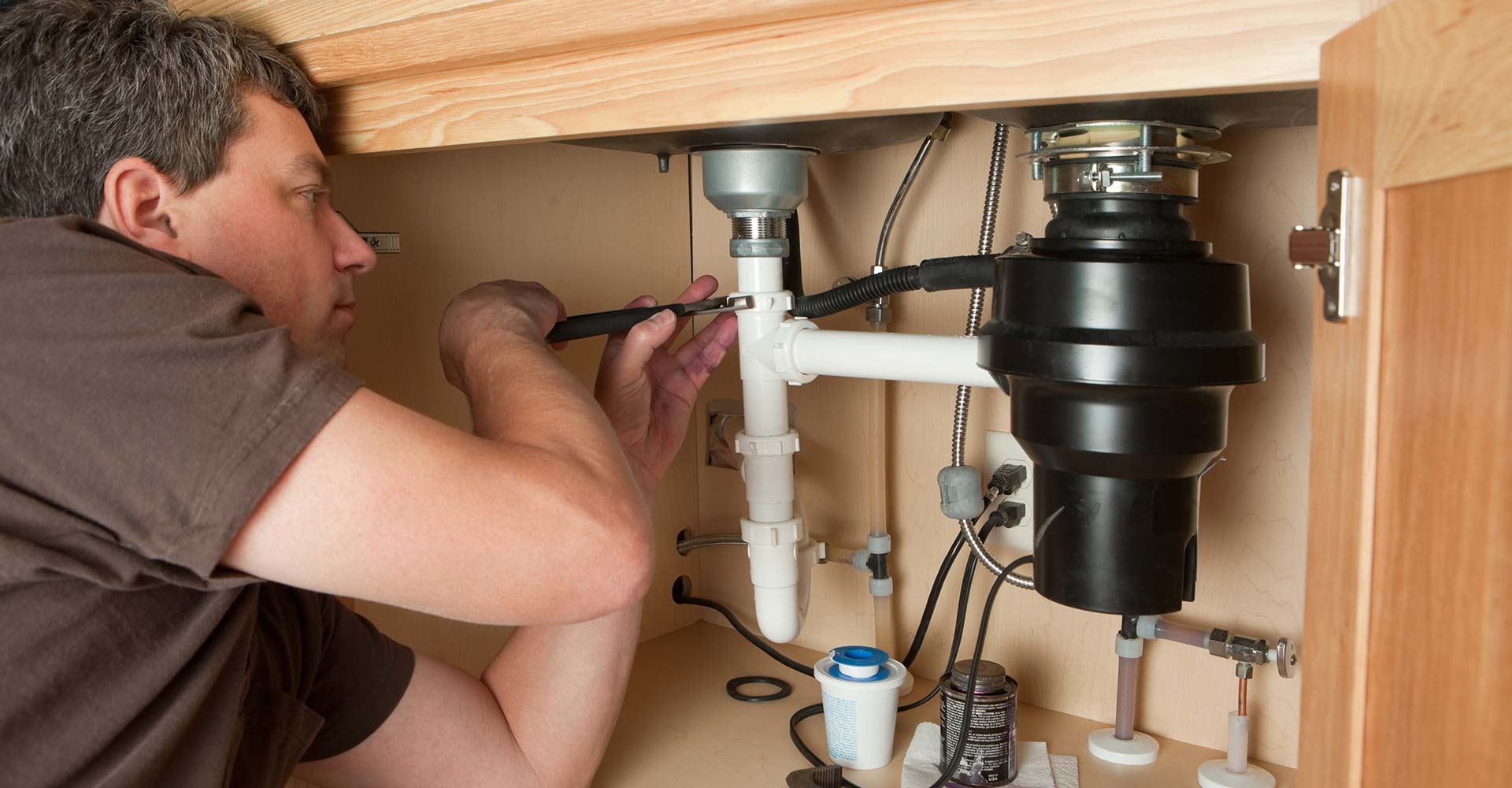
Commercial plumbing repairs
Keeping the business running.
Commercial plumbing failures cost money beyond the repair itself: a restaurant with no water service cannot open, an office building with a clogged main stack fails the tenants. Wes responds fast to commercial plumbing calls and diagnoses the problem correctly on the first visit.
He carries the tools and parts for the most common commercial plumbing failures: backflow preventers, commercial flush valves, commercial faucet cartridges, commercial water heater elements, and main drain cleaning equipment. Get a quote.
Commercial fixtures fail differently than residential ones because they get used a hundred times more often. A diaphragm in a flushometer that would last fifteen years in a house wears out in two in a busy office restroom. Sensor faucets drift out of calibration or lose the solenoid. Commercial water heaters in a Front Range building fight the same hard water everything else does, and scale on the elements or the flue passages shows up as long recovery times before it shows up as no hot water at all. Knowing which of those you are looking at saves a business a second shutdown a month later.
Most of this work gets scheduled around the business, not the other way around. Wes is available 24/7, Monday through Sunday, so commercial drain cleaning at a restaurant can get done after close and a restroom shutdown at a retail space can happen before doors open. Kitchen lines that have been building grease for years usually want hydro jetting rather than a cable, because a cable punches a hole through the buildup and the line closes back up within a month. If the building is losing water right now, call (303) 883-9075 and describe what you are seeing. Half the time the location of the water tells him what failed before he is on site.
- Commercial flush valve repair and replacement
- Backflow preventer repair and testing
- Main drain and sewer line cleaning
- Grease trap cleaning and repair
- Commercial water heater service
- Pressure-reducing valve service
- Sensor faucet and flushometer diagnosis
- After-hours and before-open scheduling
Commercial remodels and tenant improvements
Building out a new space.
A tenant improvement or commercial remodel often involves relocating sinks and drains to fit a new floor plan, adding restrooms for code compliance, or modifying the plumbing to support new equipment. Commercial plumbing work requires permits and inspections, and commercial fixtures and connections must meet commercial-grade specifications.
Wes has the master plumber’s license and the GC license to handle commercial plumbing remodels, pull the required permits, and coordinate the inspections.
Commercial restrooms carry requirements a house never does. Fixture counts are set by occupancy, not by preference. Accessible stalls need the lavatory drain and supply insulated or offset so nothing hot or sharp sits under the sink, the rim height and knee clearance have to land where the code says, and the flush control has to sit on the open side of the water closet. Those dimensions get checked at final inspection. Building them right at rough-in is a lot cheaper than moving a drain after the tile is down.
Food service and medical spaces add their own layer. A commercial kitchen needs a grease interceptor sized to the flow it will actually see, indirect waste for the prep sinks and ice machines, floor sinks in the right spots, and hand wash stations where the health inspector expects them. Medical and dental suites need vacuum breakers and the right backflow protection on anything that could pull contaminated water back into the building supply. Wes lays those out with the tenant’s equipment list in hand rather than guessing from a floor plan.
The permit side is where a lot of build-outs stall. Wes pulls his own plumbing permits, works from the approved set, and schedules the underground, rough-in, and final inspections so they line up with the framing and drywall crews instead of holding them up. Send the plan set through the contact page and he will walk the scope before anything gets ordered.
- Tenant improvement plumbing rough-in
- Restroom addition for code compliance
- Commercial sink and fixture relocation
- Commercial drain and vent modification
- Floor drain installation
- Permit and inspection coordination
- Accessible fixture layout and clearances
- Indirect waste for prep sinks and ice machines
New commercial construction plumbing
Full plumbing scope on commercial builds.
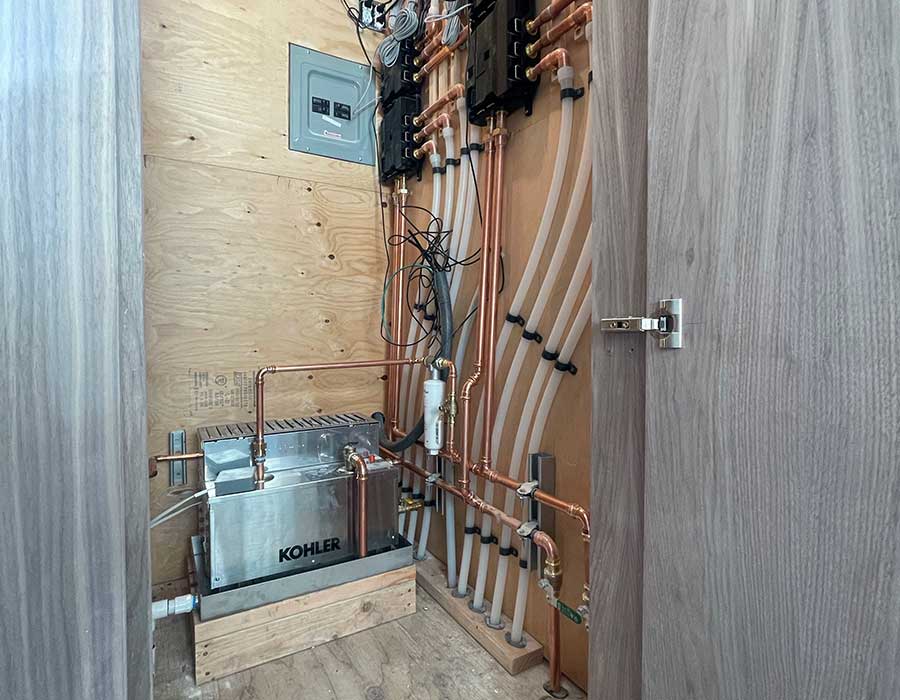
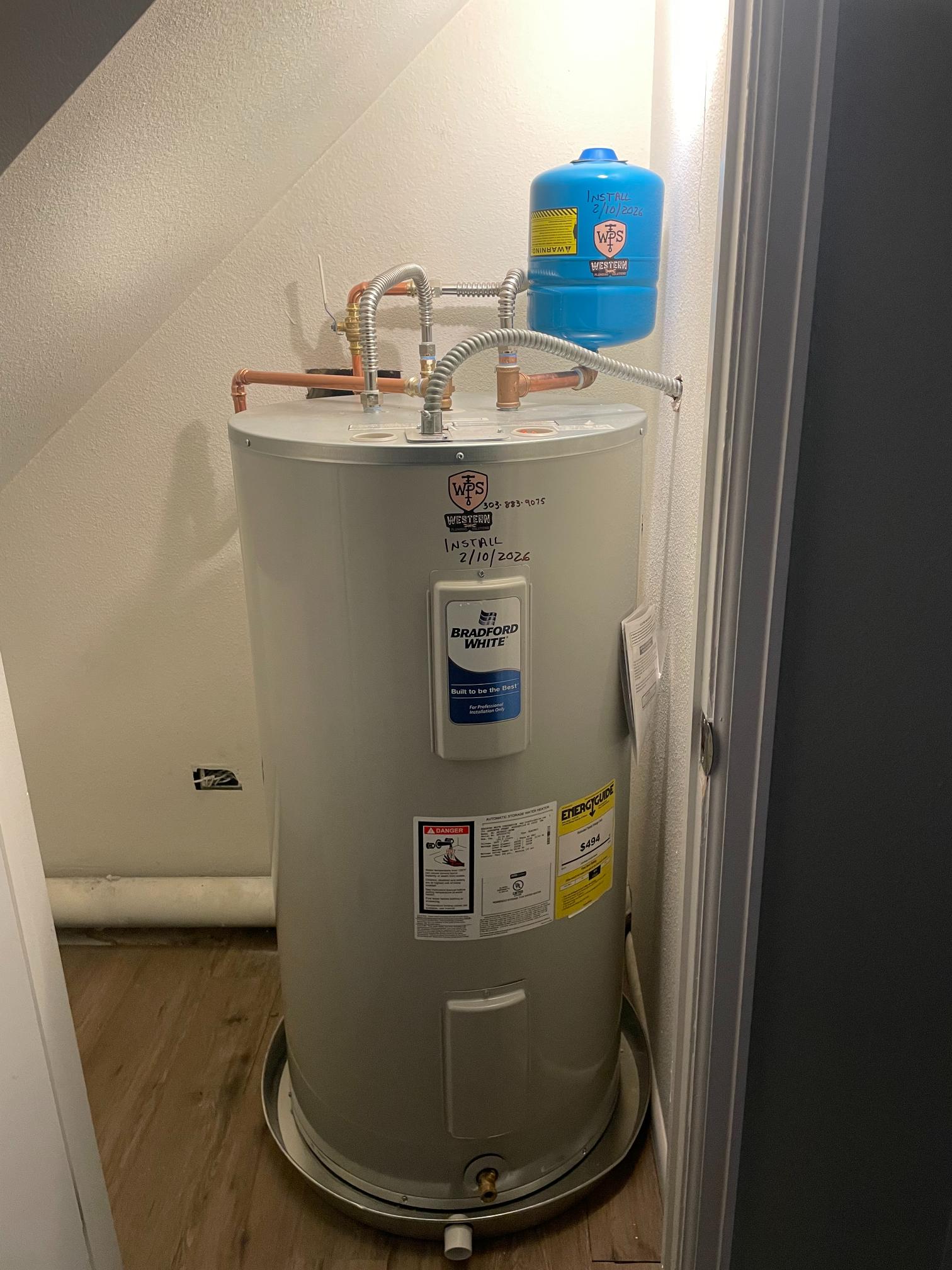
New commercial construction plumbing scopes include underground sewer and water service, full building rough-in, vent stack, plumbing for commercial kitchens, restrooms, janitorial, and specialty equipment connections. Wes handles light commercial new construction as a master plumber with GC license. See our commercial work.
Commercial sizing is a different exercise than residential. A bank of lavatories and flushometers puts a demand on the main that a house never sees, and flushometers in particular need volume, not just pressure, so undersizing the service shows up the first time three fixtures cycle at once. Backflow protection at the service entrance is required on most commercial buildings and it has to be a testable assembly, tagged and tested at startup and then annually after that. Wes handles the backflow prevention installation along with the rest of the service work so it is not a loose end somebody discovers at certificate of occupancy.
The other half of a commercial build is sequence. Underground goes in before the slab, and if the floor sinks and the grease interceptor are not located and set correctly at that stage, the fix later involves a saw and a lot of concrete. Wes walks the underground layout against the equipment schedule before anything is trenched. On the back end, trim-out and the fixture set get scheduled around finish work so nothing brand new gets damaged sitting on a jobsite for three weeks.
Licensed for commercial work
Commercial plumbing done right.
Commercial plumbing requires a master plumber’s license in Colorado. Wes holds that license along with a GC license for commercial projects that require structural coordination.
For a property manager or a business owner, the practical value of that pairing is that there is one number to call and one name on the permit. When a plumber and a general contractor are two different companies, a problem at the wall line turns into a week of back and forth about whose scope it was. Wes carries both licenses, so the answer to that question is always the same person, and it gets sorted out the day it comes up. Master Plumber License MP.03001972, Contractor License PC.0005413.
Call (303) 883-9075 for commercial plumbing service, or send the details through the contact form and Wes will get back to you with a straight quote.
How a call goes
Straight answer, fair price.
You call, we listen.
Tell us what is happening.
We look and diagnose.
No work quoted before the cause is confirmed.
Straight quote.
You know the cost before we start.
We do the work.
Tested before we leave.
Done right.
One master plumber and licensed GC, one point of contact.
Straight answers
Questions about commercial plumbing services.
Do you handle commercial plumbing emergencies?
Yes, 24 hours a day, Monday through Sunday. A business without water service cannot operate, so commercial calls get treated with that in mind. Shut off the water if you can find the valve, note what time the problem started and what has been running, and call. Knowing whether it is clean water or drain water narrows the cause down fast.
Can you do the plumbing for a restaurant build-out?
Yes. Restaurant plumbing includes commercial kitchen drains, a grease interceptor sized to your flow, indirect waste for prep sinks and ice machines, floor sinks, hand wash stations where the health inspector expects them, equipment connections, and restrooms. Wes wants the equipment schedule before the underground goes in, because moving a floor sink after the slab is poured is expensive.
Do you clean grease traps?
Yes, and he will tell you honestly how often yours needs it. Frequency depends on the volume of food you push through it, not on a calendar rule. A small cafe and a full service kitchen on the same size interceptor are on completely different schedules. If your kitchen drains keep backing up between services, the interceptor is usually the first thing to check.
What types of commercial buildings do you work in?
Offices, retail, restaurants, light industrial, medical and dental suites, and multi-family residential. Wes handles light commercial work, which covers most tenant finish, restaurant build-out, and small building projects on the Front Range. If a project is larger than that, he will say so up front instead of stretching to take it.
Can you work after hours so we do not have to close?
Usually, yes. Drain cleaning, fixture swaps, water heater work, and most repairs can happen after close or before you open. Anything that requires shutting down the building water for a stretch, like a main valve replacement or a service line repair, gets scheduled with you first so you can plan around it. Tell him your hours when you call.
How often does a backflow assembly have to be tested?
Most Colorado water providers require an annual test on commercial backflow assemblies, with the results filed with the district. It is easy to forget until the notice arrives. Wes tests assemblies, repairs the ones that fail, and replaces them when the internals are past rebuilding. If yours has never been tagged, that is worth handling before the district asks.
Do commercial restrooms have accessibility requirements for the plumbing?
Yes. Fixture counts follow occupancy, and accessible fixtures have set rules for rim height, knee clearance, flush control placement, and protection of the drain and supply lines under the lavatory. Those get verified at final inspection. Building them correctly at rough-in costs nothing extra. Correcting them after finishes are installed costs a great deal.
Do you carry the permits, or does our general contractor?
Wes pulls his own plumbing permits and schedules his own inspections. He also holds a general contractor license, which means on smaller tenant finish work he can carry the whole thing rather than handing pieces off. On larger jobs where you already have a GC, he works inside that schedule and keeps the inspection dates lined up with the other trades.
Commercial plumbing project?
Call Wes. Licensed master plumber and GC for commercial work.