Faucet Repair
A dripping faucet wastes more water than it looks like.
One drip per second is over 3,000 gallons a year. Wes finds what is failing and replaces the right part.
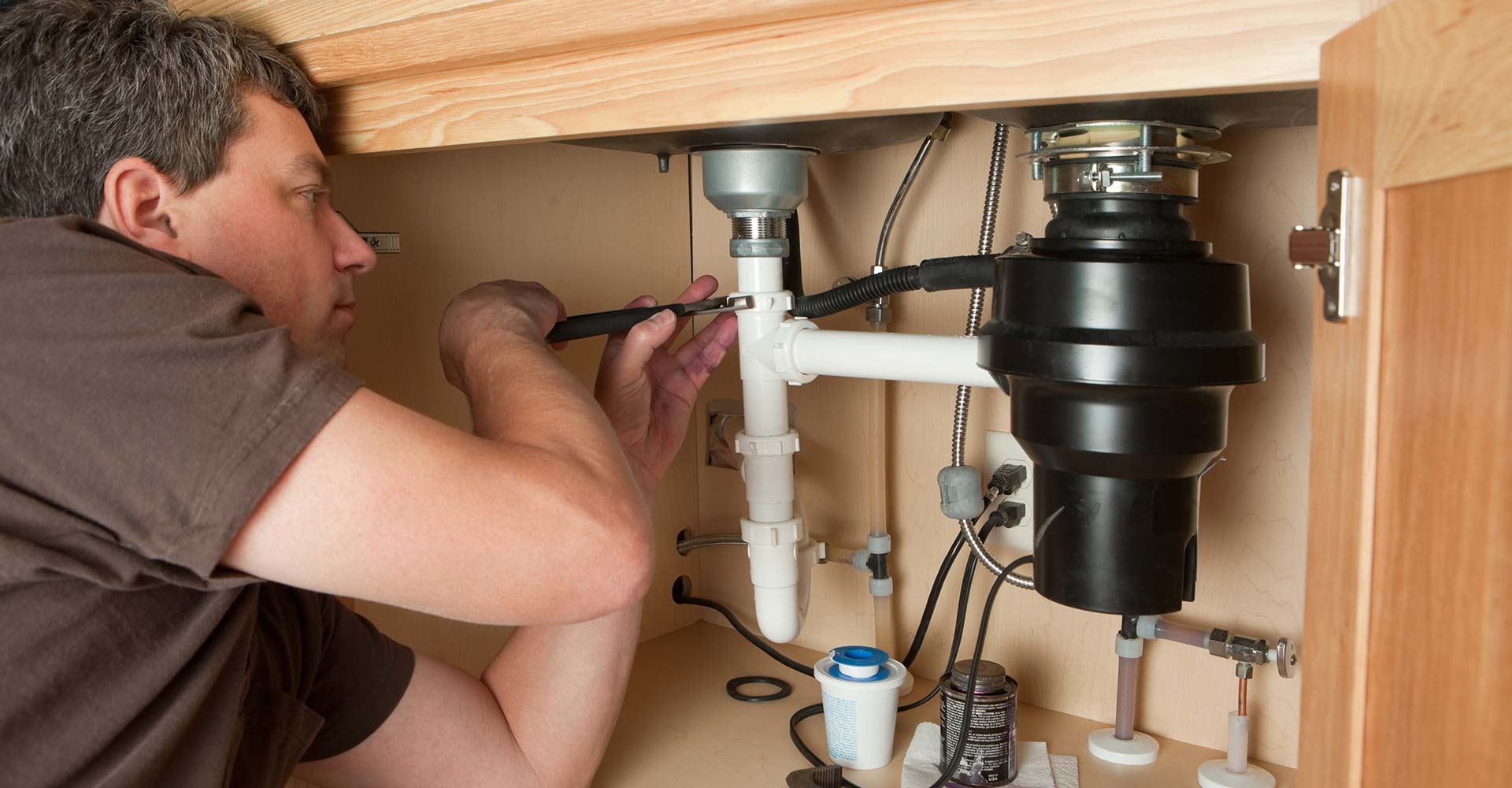
Why faucets drip
Different faucet types fail in different ways.
Ball faucets drip when the ball, springs, or seats wear out. Cartridge faucets drip when the cartridge channels no longer seal. Ceramic disc faucets drip when the disc cracks or O-rings harden. Compression faucets drip when the rubber washer wears. Replacing the right component requires knowing which type of faucet you have and what has actually failed.
Telling them apart is not hard once you know what to look for. A ball faucet has one handle that moves in a dome, usually with a small setscrew under the lever. A cartridge faucet has a handle that lifts straight up and swings side to side with a smoother feel. Ceramic disc faucets have a wide cylindrical body and a handle that moves in a short arc. Compression faucets have two handles that keep tightening past the point of comfort, which is the giveaway. Wes will name yours on sight, but if you can name it on the phone, he shows up with the right part in the truck.
Front Range water is what shortens all of them. The dissolved calcium and magnitude of hardness out here leaves a film on every internal sealing surface, and once that film builds up it acts like grit between two parts that are supposed to slide against each other. Ceramic discs, which are otherwise close to bulletproof, will start weeping once the deposits score them. Brass valve seats in older two-handle faucets pit from the same cause. It is the single biggest reason faucets in Littleton and Lakewood do not last as long as their catalog numbers suggest.
Wes identifies the faucet type and failing component before ordering anything. For common Delta, Moen, and Kohler models, he stocks the most frequently needed cartridges. Those three brands are worth mentioning because their parts are genuinely available, and Delta and Moen both back their cartridges with a lifetime warranty to the original owner, which means the part itself often costs nothing. Off-brand and imported faucets are the opposite story, and that changes the repair math quickly. Call and get it fixed.
- Ball faucet repair
- Cartridge replacement
- Ceramic disc faucet repair
- Compression washer replacement
- Handle and stem replacement
- Valve seat resurfacing
- Aerator descaling and replacement
- Pull-down sprayer hose and diverter repair
Leaks at the base
Water under the faucet damages the cabinet and subfloor.
A faucet leaking at the base of the spout has a worn O-ring around the spout body. The water runs down the faucet and collects under the sink, often going unnoticed until the cabinet floor is swollen. Replacing the O-ring stops it.
Not every puddle under a sink came from the faucet, and that is worth sorting out before parts get thrown at it. Water under a cabinet can be a leaking P-trap, a loose slip nut, a dishwasher drain line, a sweating cold supply in humid weather, or the sink strainer basket letting go around its putty seal. The tell is where the wood is stained. Faucet leaks track down the back wall of the cabinet under the deck. Drain leaks pool in the middle. Wes reads that before he starts pulling things apart.
While under the sink, Wes checks supply lines and shutoff valves. Braided supply lines have an 8 to 10 year service life. Shutoff valves that have not moved in years can seize when you need them. He notes what is close to end of life and gives a straight recommendation. The failure worth taking seriously is a supply line that lets go while nobody is home. That is not a drip, that is a garden hose running into your kitchen floor until somebody walks in. Old chrome tubes and any braided line past a decade are the two things Wes flags hardest.
Shutoffs deserve the same attention. Multi-turn compression stops from the seventies and eighties dry out at the packing, and the moment you finally force one it starts weeping around the stem. Quarter-turn ball stops do not have that habit. Swapping them during a faucet repair takes minutes with the cabinet already open, and it means the next time something goes wrong you can actually stop the water. If the leak turns out to be somewhere you cannot see, leak detection is the next step.
- Spout O-ring replacement
- Base gasket replacement
- Supply line inspection
- Shutoff valve assessment
- Under-sink leak diagnosis
- Drain and P-trap check
- Sink strainer and basket reseal
- Cabinet floor damage assessment
When replacement makes more sense
Older faucets are sometimes not worth repairing.
A faucet that is corroded through, missing parts no longer made, or one repaired several times is often better replaced. Wes tells you that honestly if the repair cost approaches a quality replacement, and installs the new faucet in the same visit. See fixture work.
Here is roughly where the line sits. A named-brand faucet under about fifteen years old with a cartridge you can still buy is worth fixing, and it is not close. A faucet where the finish is flaking, the spout is pitted, and the body has been apart twice already is throwing money at a losing position. Same when the handle base has cracked through, when the deck plate is rusted to the sink, or when the brand went out of business and nobody makes a matching stem. Wes does not stretch a repair to bill for it, and he does not push a replacement to sell you one. He tells you which side of the line yours is on and lets you decide.
Timing matters too. If you have a functioning faucet with a slow drip, you have time to shop and pick something you actually like. If it is spraying at the base and soaking the cabinet, that gets stopped today and the shopping happens after. And if you decide to replace, the visit does not have to happen twice. See faucet installation for what that job involves, or fixture replacement if more than one thing in the room is showing its age.
Diagnosis first
Faucet repairs that hold.
Swapping parts without diagnosis leads to a callback. Wes identifies the exact failing component, replaces the right part, and tests for drip and handle smoothness before packing up.
The test is deliberate. A drip that only shows up on the hot side points at a different part than one that appears on both. A faucet that drips right after shutoff and then stops is usually just draining the spout, and that is not a failure at all. A faucet that drips steadily fifteen minutes later has a seal problem. Wes waits out that difference rather than declaring victory at the thirty second mark and getting called back next week.
Wes is a Master Plumber and a licensed General Contractor working out of Littleton, on call 24 hours a day, seven days a week across Denver, Jefferson County, Arapahoe County, and up into the mountain towns. If a faucet let go at midnight and you cannot get the shutoff to close, that is exactly the kind of call the phone is on for. Call (303) 883-9075.
How a call goes
Straight answer, fair price.
You call, we listen.
Tell us what is happening.
We look and diagnose.
No parts quoted before the cause is confirmed.
Straight quote.
You know the cost before we turn a wrench.
We do the work.
Tested before we leave.
Done right.
One master plumber, one point of contact.
Straight answers
Questions about faucet repair.
Can you repair any brand of faucet?
Most major brands. Delta, Moen, Kohler, American Standard. Those manufacturers still supply cartridges and stems for models going back decades, and Delta and Moen honor a lifetime warranty on the part for the original owner. Very old or off-brand faucets may have unavailable parts, in which case replacement is the answer. Wes will tell you which situation you are in before doing any work.
How do I know if my faucet is worth repairing?
Under 15 years old and structurally sound, repair is usually worthwhile. Structurally sound means the body is not pitted, the finish is not peeling, and the handle base is not cracked. Once a faucet has been apart two or three times for different failures, the rest of it is generally lining up to go too. Wes will tell you honestly if replacement makes more sense.
My faucet is hard to turn. Is that a repair?
Yes. A stiff handle usually has a worn or mineral-coated cartridge. Hard water builds a crust on the sealing surfaces until the handle drags. Replacement makes it smooth and prevents the drip that is often developing at the same time. Forcing a stiff handle is how people snap stems and turn a thirty minute job into a longer one, so deal with it early.
How long does faucet repair take?
30 to 60 minutes for most repairs, assuming the correct part is on the truck. Cartridges that have mineralized into the valve body take longer, since they have to be pulled with a puller rather than by hand. Two-handle faucets are two repairs, not one. If Wes has to source a specific part, he will tell you at the visit rather than leaving you guessing.
Is a dripping faucet worth fixing right away?
Yes. One drip a second is over 3,000 gallons a year going down the drain and onto your water bill. Beyond the waste, a drip means a seal is already failing, and seals do not get better. The other reason is mineral staining: hard Front Range water leaves a rust-colored track in the basin that eventually will not scrub out of porcelain or enameled cast iron.
What causes low flow from just one faucet?
Nine times out of ten it is the aerator at the tip of the spout, packed with scale and grit. Unscrew it, soak it in vinegar, rinse the screen and reinstall. If both handles run weak after that, the cartridge screens are clogged or the shutoff valve under the sink is only partly open. If every faucet in the house is weak, the problem is upstream and needs pressure testing.
Do you charge to diagnose a faucet problem?
Wes comes out, finds the actual cause, and gives you the number before he turns a wrench. You will know what the repair costs and what a replacement costs, and you decide from there. Nothing gets ordered and nothing gets taken apart on a guess. That is the whole reason people call about a faucet and end up calling again about a water heater.
Can I fix a dripping faucet myself?
Often, yes. A cartridge swap on a Moen or Delta is a reasonable job if the shutoff turns and you have the model number. What sends people to a plumber is a cartridge seized in the body, a stripped setscrew, a shutoff that will not close, or a stem that snaps off in your hand. If any of that happens, stop and call before the sink is out of commission for the weekend.
Faucet dripping or leaking?
Right diagnosis, right repair, holds long-term.