Garbage Disposal Installation
A disposal installed right does not leak, rattle, or trip the breaker.
Wes installs disposals with a solid mount, proper electrical connection, and a discharge line that drains cleanly.
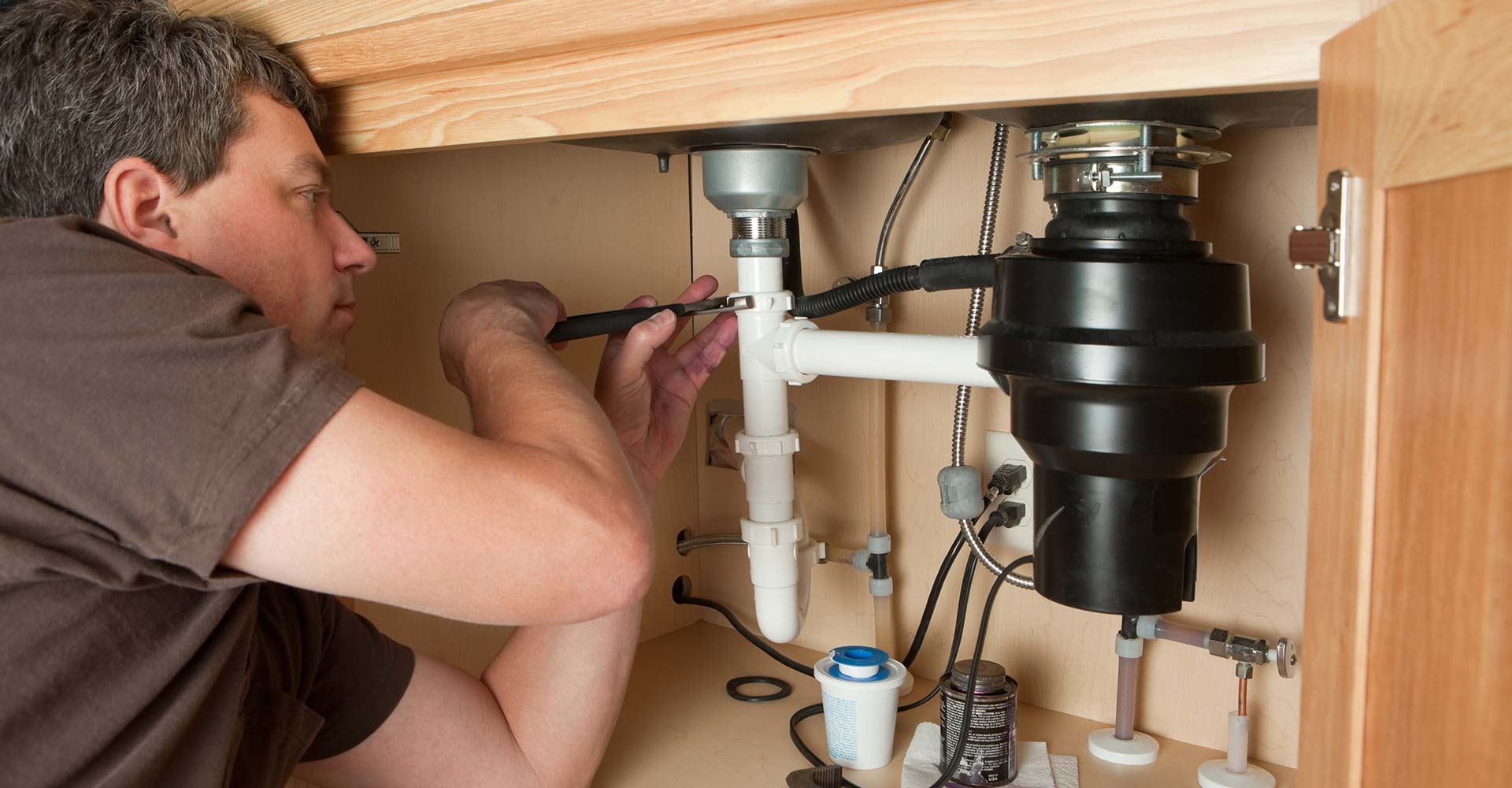
First-time disposal installation
Adding one where there was none.
Adding a disposal where none existed requires a standard 3.5-inch drain opening in the sink, a 120V outlet under the sink, and a drain line that can accept the discharge at the correct angle. In older kitchens, one or more of these may need to be created.
The drain angle is where most first-time installs go sideways. A disposal discharges below the level of the sink basket, so the tee that ties into the trap arm has to sit low enough to let the unit drain by gravity. In a lot of Littleton kitchens built in the seventies and eighties, that tee is set high, and the disposal ends up holding a cup of standing water in the chamber after every use. That water goes stale and the kitchen starts to smell. Correcting it means reworking the trap arm, not buying a different disposal.
The other decision to make up front is continuous feed or batch feed. A continuous-feed unit runs off a wall switch and grinds while you keep pushing food in. That is what most people picture, and it is what most kitchens get. A batch-feed unit only runs when a magnetic stopper is seated in the throat, so it cannot start with a spoon or a hand in it. If you have small kids in the house or an island sink where the switch would be awkward, batch feed is worth the extra money. Wes will walk through both instead of just handing you a box.
As a master plumber and licensed GC, Wes handles the outlet if one needs to be added. He assesses the sink, outlet, and drain before the installation starts, so there is no halfway through discovery that turns into a second trip. Get a quote for the full install.
- Sink opening assessment
- Dedicated outlet installation
- Drain line modification
- Mounting assembly installation
- Dishwasher inlet connection
- Full electrical hookup
- Trap arm height correction
- Continuous or batch feed selection
Disposal replacement
Swapping a failed unit.
Replacing an existing disposal is straightforward if the new unit uses the same mounting assembly, which most modern disposals do. Wes removes the old unit, checks the sink flange and putty seal, installs a new flange if needed, mounts the new unit, and reconnects the discharge and dishwasher lines.
One step gets missed on do-it-yourself replacements more than any other: the dishwasher knockout plug. Every new disposal ships with a solid plug cast into the dishwasher inlet so the unit can be used in a kitchen that has no dishwasher. If your dishwasher drains into the disposal, that plug has to be punched out with a screwdriver and the loose slug fished out of the chamber before anything gets hooked up. Skip it and the dishwasher will not drain, water backs up in the tub, and people usually blame the dishwasher. Leave the slug in the grinding chamber instead of removing it and it rattles like a rock every time the unit runs.
He also checks the outlet condition. An outlet under a leaking disposal for years often has corrosion that needs addressing. The mounting ring gets attention too. Old three-bolt assemblies fatigue, and a ring that is out of round will not hold the new unit square no matter how hard you crank it. Replacing the whole flange and ring assembly during a swap costs almost nothing in parts and takes the wobble out permanently. If you have a stainless sink with a thin deck, fresh plumber’s putty under a properly seated flange is what keeps the top of the unit dry for the next decade.
Wes also looks at what else lives under that sink. If the trap is a flex line, if the shutoffs are frozen, or if the supply stubs are the old chrome-plated ones that snap when you turn them, he will tell you while the cabinet is open rather than leaving it for the next guy. Related work often gets handled in the same visit, whether that is a new faucet or a dishwasher hookup.
- Old unit removal
- Flange and seal inspection
- New unit mounting
- Discharge line connection
- Dishwasher drain reconnection
- Outlet condition check
- Dishwasher knockout plug removal
- Mounting ring replacement
Sizing and horsepower
Bigger is not always better.
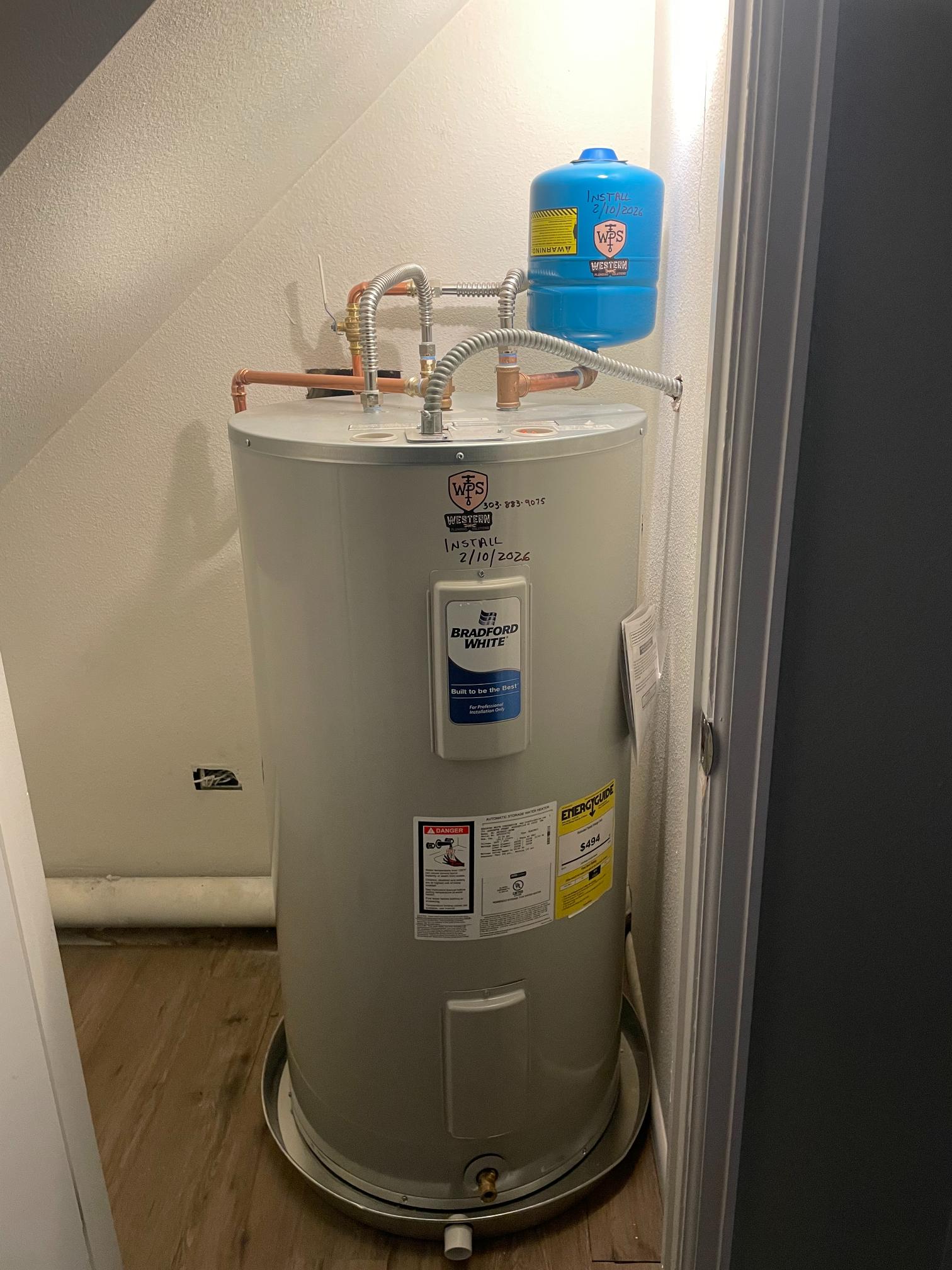
Disposal horsepower ranges from 1/3 HP for light use to 1 HP for heavy household use. Wes recommends based on household size and usage habits. Most households do well with 3/4 HP. A large family cooking daily benefits from a full 1 HP unit. See our kitchen plumbing work.
Horsepower is not really about power, it is about how often the unit jams. A 1/3 HP motor will grind a plate of leftovers fine on a Tuesday. Load it after a holiday dinner and it stalls, you reach for the reset button, and you do that enough times that the motor bearings give out early. The bigger motor mostly buys you fewer stalls and a longer life, which is why a household of four or five is better off at 3/4 HP even if the smaller unit would technically do the job.
The other spec worth caring about is the grinding chamber. Stainless steel grinding components hold up better than galvanized ones, and that matters more here than it does at sea level. Front Range water carries enough calcium and magnesium to leave scale on everything it touches, and a galvanized chamber in a hard water house corrodes at the seams years before the motor is tired. If the house is on a well out in Douglas County, go stainless without thinking about it.
Sound is the last thing people ask about and the first thing they notice. Insulated units are noticeably quieter, which is worth it in an open kitchen where the sink sits six feet from the dining table. In a closed galley kitchen most people never care. Bigger jobs that touch the whole room fall under kitchen plumbing.
Mounted solid, draining clean
Disposal installation done right.
A disposal that leaks at the flange, trips the breaker, or does not drain cleanly was not installed correctly. Wes torques the mounting evenly, seals the flange with fresh putty, sets the discharge angle to drain without pooling, and tests before packing up.
Testing means running water through it with the cabinet open and a hand under every joint, then running the dishwasher a full cycle if it drains through the unit. Half of the leaks people find a week after an install would have shown up in that five minutes. He is a master plumber and a general contractor, so if a countertop cutout, a cabinet floor, or an outlet needs attention to finish the job, that is handled in the same visit rather than turning into a second contractor and a scheduling problem.
He works out of Littleton and covers roughly a hundred miles of the Front Range, and the phones are answered day and night, seven days a week. Call (303) 883-9075 or send the details over and you will get a straight answer about what the install involves.
How a call goes
Straight answer, fair price.
You call, we listen.
Tell us what is happening.
We look and diagnose.
No parts quoted before the cause is confirmed.
Straight quote.
You know the cost before we turn a wrench.
We do the work.
Tested before we leave.
Done right.
One master plumber, one point of contact.
Straight answers
Questions about garbage disposal installation.
Do I need an electrician for disposal installation?
No. Wes is a licensed GC as well as a master plumber, so the outlet and switch are part of the same job. If the cabinet has no receptacle, he adds one on a properly protected circuit and wires the switch. You are dealing with one person for the whole install instead of scheduling a plumber and an electrician around each other.
What size disposal should I get?
3/4 HP suits most households and is the size Wes puts in most often. 1 HP is worth it for a large family that cooks every night, mostly because the bigger motor stalls less and lasts longer. 1/3 and 1/2 HP units are fine for a couple who rarely cook, but they jam more, and repeated resets shorten motor life.
What is the difference between continuous feed and batch feed?
Continuous feed runs off a wall switch and grinds while you keep pushing scraps in. Batch feed only runs when a magnetic stopper is seated in the throat, so it cannot start with a hand or a spoon down there. Batch feed costs more and is slower to use, but it is the safer choice with young kids or an island sink.
How long does disposal installation take?
A straight replacement using the same mounting assembly runs one to two hours including testing. A first-time install where an outlet has to be added and the trap arm reworked is more like three to four hours. If the sink itself needs a new drain opening cut, that is a separate conversation before the day is scheduled.
Can a disposal be added to any kitchen sink?
The sink needs a standard 3.5-inch drain opening, which most kitchen sinks already have. Thin stainless decks sometimes flex enough that the flange needs extra care to seal. Fireclay and composite sinks vary, so Wes confirms the opening and deck thickness before ordering anything.
What happens if the dishwasher knockout plug is not removed?
The dishwasher will not drain. Water sits in the bottom of the tub at the end of every cycle and people usually assume the dishwasher failed. If the plug is punched out but the loose slug is left inside the grinding chamber, the unit rattles hard every time it runs. Both are quick fixes once somebody knows to look.
Does a disposal install need a permit?
A like-for-like replacement generally does not. Adding a circuit or reworking drain lines can trigger one depending on the municipality, and requirements differ between Littleton, Lakewood, Denver and unincorporated Jefferson County. Wes checks with the jurisdiction and pulls the permit when one is required, rather than leaving that on you.
Do you handle the rest of the under-sink plumbing while you are there?
Yes. If the shutoffs are seized, the trap is a corrugated flex line, or the supply stubs look brittle, he will show you and give a price to fix it while the cabinet is already open. That is usually the cheapest time to do it. Same goes for tying in a dishwasher or a new faucet.
Need a disposal installed?
Wes handles the mount, the drain, and the electrical. One call, done right. If the old unit is still limping along, start with disposal repair and see whether it is worth saving.