Old pipe and hard winters
Rusty, frozen and pinholed Bennett pipe, fixed so it stays fixed.
A leak you can see is usually the last sign of a problem that has been building in a wall or under the floor for a long time. We find where the pipe is actually failing, tell you whether a repair will hold, and do the work in copper or PEX meant to outlast the house.
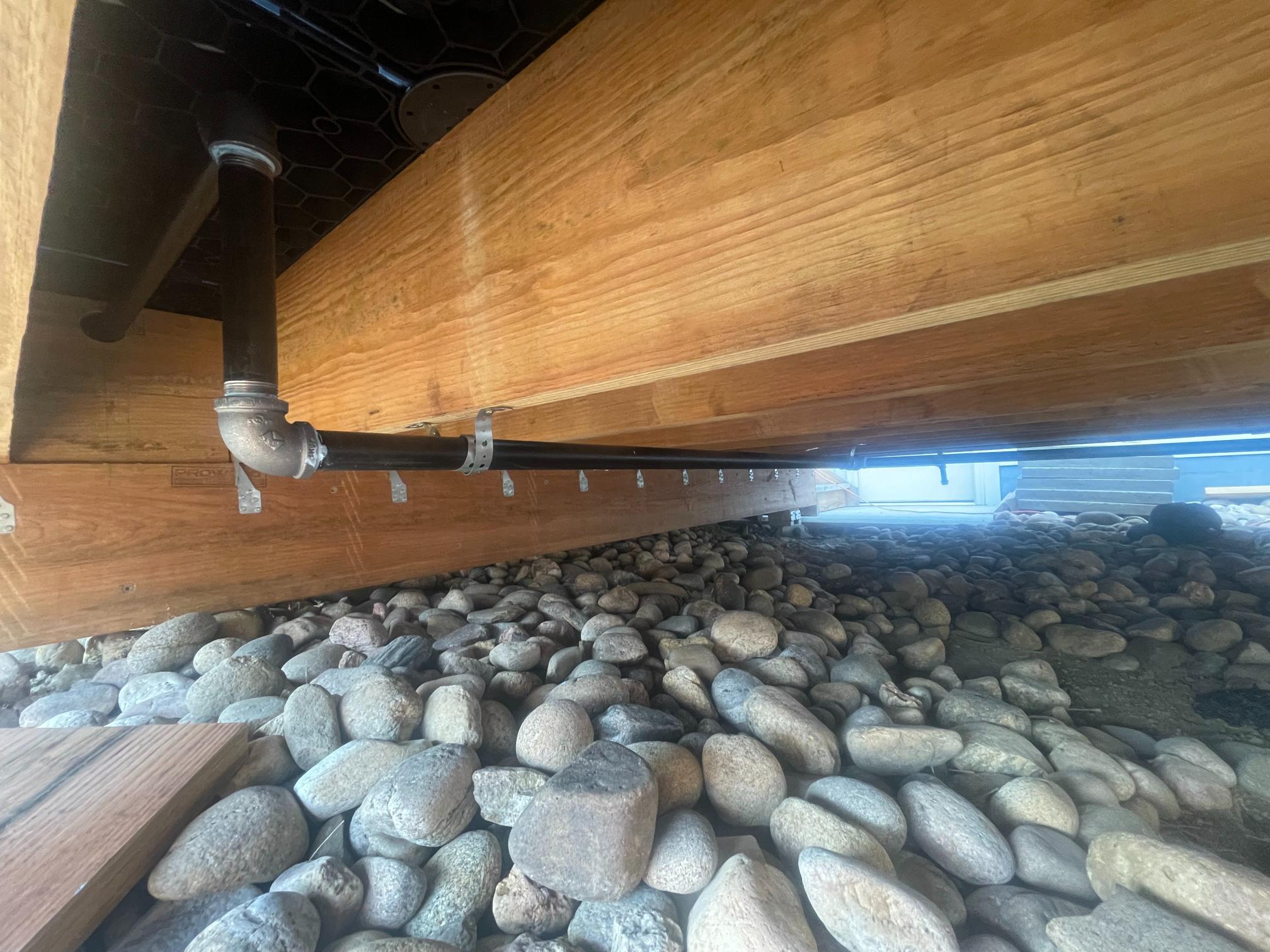
A line that froze once is still carrying that winter.
The seasons swing hard on the plains east of Denver, and the pipe that takes the worst of it runs through crawl spaces and utility areas where the insulation tends to be thin.
When a line freezes and thaws without bursting, it is tempting to count yourself lucky and forget about it. The pipe does not forget. Its joints and fittings were pushed past what they were built for, and that section is now a likelier spot for the next leak, usually in the middle of the next cold snap when nobody wants to crawl under the house.
If a pipe froze on you last winter, deal with it before the next one arrives. At the very least, wrap the exposed runs and seal the gaps in the crawl space foundation that let cold air blow across them. If that section actually cracked or weakened, replace it while the weather is mild. Some runs are simply in the wrong place, and rerouting them along a warmer path is the lasting answer. We look at freeze exposure whenever we are inside a Bennett home, even on a call about something else.
A burst on a frozen night means water across the floor and a long drive between your house and help. Fixing it on a calm afternoon is better for everybody involved.
Call (303) 883-9075 or reach out here to have a stressed line looked at. Repairs and repipes we have finished are in the gallery, and our pipe repair page covers the full service.
- Frozen sections replaced
- Exposed runs wrapped
- Foundation gaps pointed out
- Rerouting to warmer paths
- Pressure test after repair
- Crawl spaces and utility areas
Older homes on the corridor
Galvanized supply that has closed up from the inside.
Some of the older homes along the eastern corridor still carry their original galvanized steel supply lines, and those lines tend to fail in the same slow way. Galvanized corrodes from the inside out. Over decades the rust builds until the opening is a fraction of the diameter it started with. You feel it as weak pressure at every faucet in the house, you see it as water that runs rust-colored for a moment when a tap first opens, and eventually you find it as pinhole leaks. Patch one pinhole and another appears a few feet away, because the whole run is the same age and has worn down to the same thin wall.
Chasing those leaks one at a time gets old, and it never really ends. Once galvanized reaches that stage, a repipe in copper or PEX is what stops the calls for good. If only a short stretch was ever galvanized, or an earlier owner already replaced most of it, a section repair can still make sense. We look at the pipe itself before telling you which way to go. Call (303) 883-9075.
Repair the section or repipe the house?
That is the real question on most pipe calls, and the answer comes from the condition of everything around the leak.
A section repair fits when the failure is local. A fitting that let go, a length of pipe split by a freeze, a spot where somebody drove a screw through a line while hanging a shelf. The pipe on either side is sound, so we cut out the bad piece, join new material to good material, and pressure test the result before the wall closes.
A full repipe fits when each failure is a symptom of age: galvanized closing up, pinholes that keep coming back, or a patchwork of old repairs in mismatched materials. At that point every section repair is a bet that the pipe right beside it will hold, and that bet keeps losing. Copper and PEX both do the job well, and we will explain which suits your walls and your water. Because Wes also holds a general contractor license, the drywall we open gets put back by the same outfit, so you are not left hiring someone else to finish the room.
On a repair day we shut the water off at the main, or at the pressure tank on a well home, drain the affected run, and make the fix. Before anyone packs up, the water goes back on under pressure and we check every joint we touched. You hear ahead of time which fixtures will be out and when the house will be dry, so nobody gets caught with soap in their hair.
- Local failures cut out
- Pressure tested every time
- Whole-house copper or PEX
- Drywall opened and closed by us
- An honest call on scope
- Material matched to the house
Newer builds have their own weak spots.
Bennett has grown steadily, and plenty of recent homes went up on tight construction timelines. That sometimes meant builder-grade materials throughout: supply valves, fittings and fixture connections chosen for speed and volume. Add pressure issues from the water systems serving growth areas, and those joints get stressed years before they should give out. So a young house can still show a weeping shutoff under a sink or a slow drip at a fitting behind the washer. On these calls we check the pressure coming into the house, because replacing the leaking part while that pressure keeps pushing only resets the clock. If it is running high, we talk through bringing it down. A newer home is worth having looked over before small drips turn into ceiling stains and swollen cabinet floors.
Well homes, and the work that sits next to a pipe repair.
On a rural Bennett property with a well, the well itself belongs to a well contractor. Everything from the pressure tank into the house is ours: the tank connections, filtration, the supply lines, and every pipe running from there to the fixtures. Pressure swings and leaks on that side are pipe repair calls like any other, and we treat them that way. A failing pipe is also rarely the only thing going on in a house, so here is where the related work lives.
A drain behind the wall
If a repair opens a wall with a slow drain inside it, drain cleaning in Bennett handles it while access is easy.
The sewer run
Supply comes in and waste goes out. Backups that keep returning belong under sewer services in Bennett.
At the heater
Corroded connections or a scaled tank are their own job. See water heater installation in Bennett.
A bath addition
A repipe and a new bathroom pair well when walls are already open. That is a bathroom remodel in Bennett.
Straight answers
Before you call about a leak.
How do I know if my house still has galvanized pipe?
Look where the water line enters the house or at the connections on top of the water heater. Galvanized is dull gray steel with threaded fittings. Low pressure throughout the house and rusty water on the first draw are strong hints. We can confirm it on our first visit.
A pipe in our crawl space froze but did not burst. Is it okay?
It may be holding, but it has been stressed. Insulate the exposed run and seal the gaps letting cold air in before next winter. If that section cracked or weakened, replace it now so it does not fail during a hard freeze.
Is PEX or copper better for a repipe?
Both are solid choices that last. PEX is flexible and easier to route through finished walls with less opening up. Copper is rigid and holds its shape well on exposed runs. We look at your house and your water, then recommend the one that fits.
We are on a well. Do you work on our plumbing?
Yes. Pressure tank diagnostics, filtration, supply lines and every pipe inside the house are ours. We do not drill wells or service the well itself. If the trouble is down the well, we will say so and you can call a well contractor.
Our house is only a few years old. Why is it leaking?
Newer homes sometimes have builder-grade valves and fittings, and high water pressure can wear those joints early. We fix the leak and check the incoming pressure so the next fitting in line does not become the next leak. Call (303) 883-9075.
Tired of patching the same pipe?
Give Wes a call and describe what you are seeing, whether that is rust in the glass, a damp patch on the crawl space floor or pressure that keeps dropping. He will find where the pipe is failing, give you an honest number before any work starts, and do the repair himself, built to last longer than you will own the house.