Low Water Pressure Solutions
Weak flow always traces back to something.
One slow faucet and a whole slow house are two different problems. Wes narrows it down fixture by fixture, finds the actual restriction, and tells you straight what it takes to open it back up.
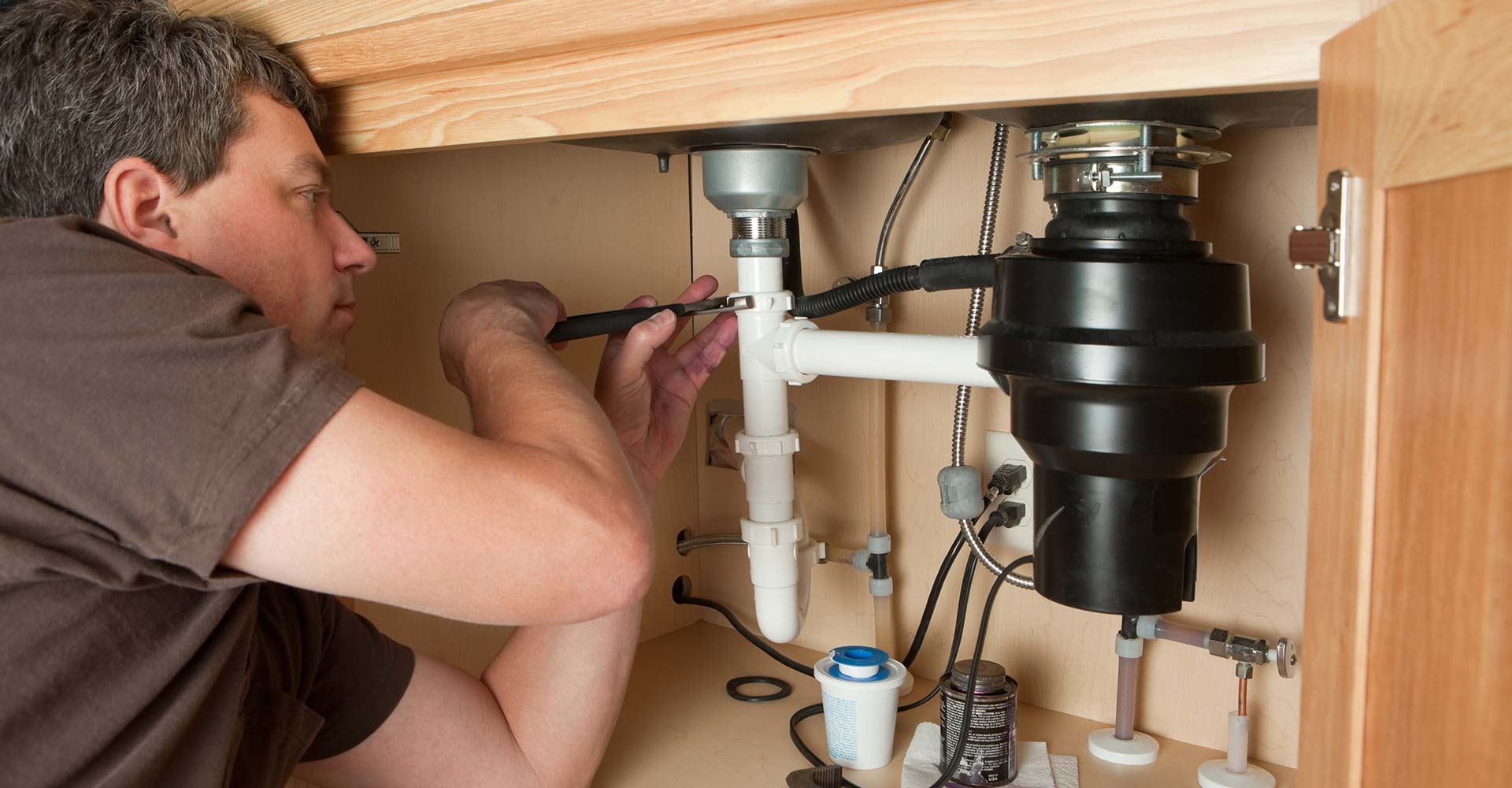
One fixture or all of them
The first question narrows it by half.
Before anything else, Wes wants to know how wide the problem is. Walk the house and run each fixture one at a time. If the kitchen sink crawls and the shower down the hall is fine, the restriction lives close to that sink and it is usually a small part. If every tap in the house is weak, the restriction is upstream of all of them and the search moves toward the service line coming in from the street. That one question cuts the possibilities in half before a single tool comes out of the truck.
The second question is hot, cold, or both. Weak on hot only points at the water heater side, often sediment packed in the bottom of the tank or a partially closed valve on the heater outlet. Weak on both at the same fixture points at the fixture itself or the stops under it. Weak on cold only usually means a valve somewhere on the cold run. It is a simple test and homeowners can do it in five minutes before they ever pick up the phone.
The third question is whether it happened overnight or crept up over years. Gradual loss is almost always buildup or corrosion doing its slow work. A sudden drop is a valve, a failed part, or a leak somewhere between the meter and the house that is bleeding off flow before it ever reaches you. Tell Wes what you are seeing and he will tell you where to start looking.
- Fixture-by-fixture flow comparison
- Hot versus cold isolation
- Aerator and screen inspection
- Angle stop and shutoff valve check
- Supply line and cartridge diagnosis
- Service line flow testing
- Water heater side restriction check
- Well and pressure tank inspection
The galvanized problem
Decades of buildup, not a quick fix.
The Front Range has a lot of homes built in the 1950s through 1970s with original galvanized steel supply pipe. Hard Colorado water deposits minerals inside the pipe for years until the interior diameter is choked down. No amount of cleaning fixtures or adjusting valves fixes that. The pipe itself is the restriction.
What makes it sneaky is how slowly it arrives. A half inch galvanized line that has narrowed to a quarter inch of open bore did not do that last month, it did it over forty years, and the family living there adjusted to it a little at a time without noticing. Then a new shower head goes in, or somebody visits from a house with normal pressure, and suddenly it is obvious. Cut a section of that pipe and hold it up to the light and the story tells itself. Wes does exactly that when he has to open a wall, because a homeowner who sees the inside of their own pipe never has to take his word for anything.
The other tell is rusty water in the morning after the house has sat still overnight, or flakes coming out of the aerator screens. That is the galvanizing failing from the inside. Older Denver and Englewood neighborhoods are full of it, and some houses have a partial replacement where a previous owner did the visible basement runs and left everything inside the walls alone.
A repipe in copper or PEX resolves it permanently. Wes scopes it honestly: if only a portion of the galvanized is the bottleneck, he replaces that section. If the whole system is compromised, a full repipe is the right call and he says so upfront rather than selling you a partial fix twice. See repiping services for how that work goes.
- Section repipe where a targeted fix works
- Full house repipe in copper or PEX
- Cut sample shown to the homeowner
- Licensed GC handles wall and ceiling work
- Hard water filtration options
- Pressure and flow test after every repipe
- Old polybutylene runs identified
- No unnecessary scope creep
Small parts, big restrictions
Sometimes it is a screen the size of a dime.
Not every weak faucet is a pipe problem. Aerator screens catch the scale that Front Range water leaves behind, and on a hard water house they will pack solid in a year or two. Unscrew one, hold it up, and you can usually see daylight through less than half of it. Shower cartridges do the same thing internally, and so do the little inlet screens on washing machine hoses. These are cheap parts doing quiet damage to your daily routine.
Angle stops under sinks and toilets are the other frequent culprit, especially after any work has been done in the house. A multi-turn stop that got closed for a repair and reopened three quarters of the way looks fine and chokes the fixture forever. Older stops also seize with mineral deposits and stop opening fully even when the handle turns all the way. Wes checks every stop on a low-flow fixture before he goes looking for anything expensive.
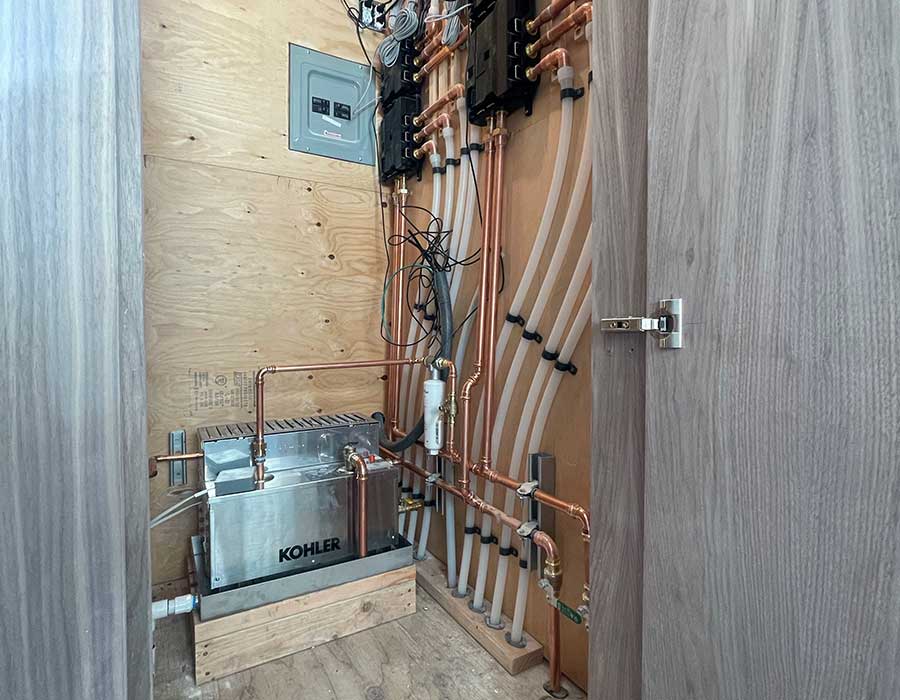
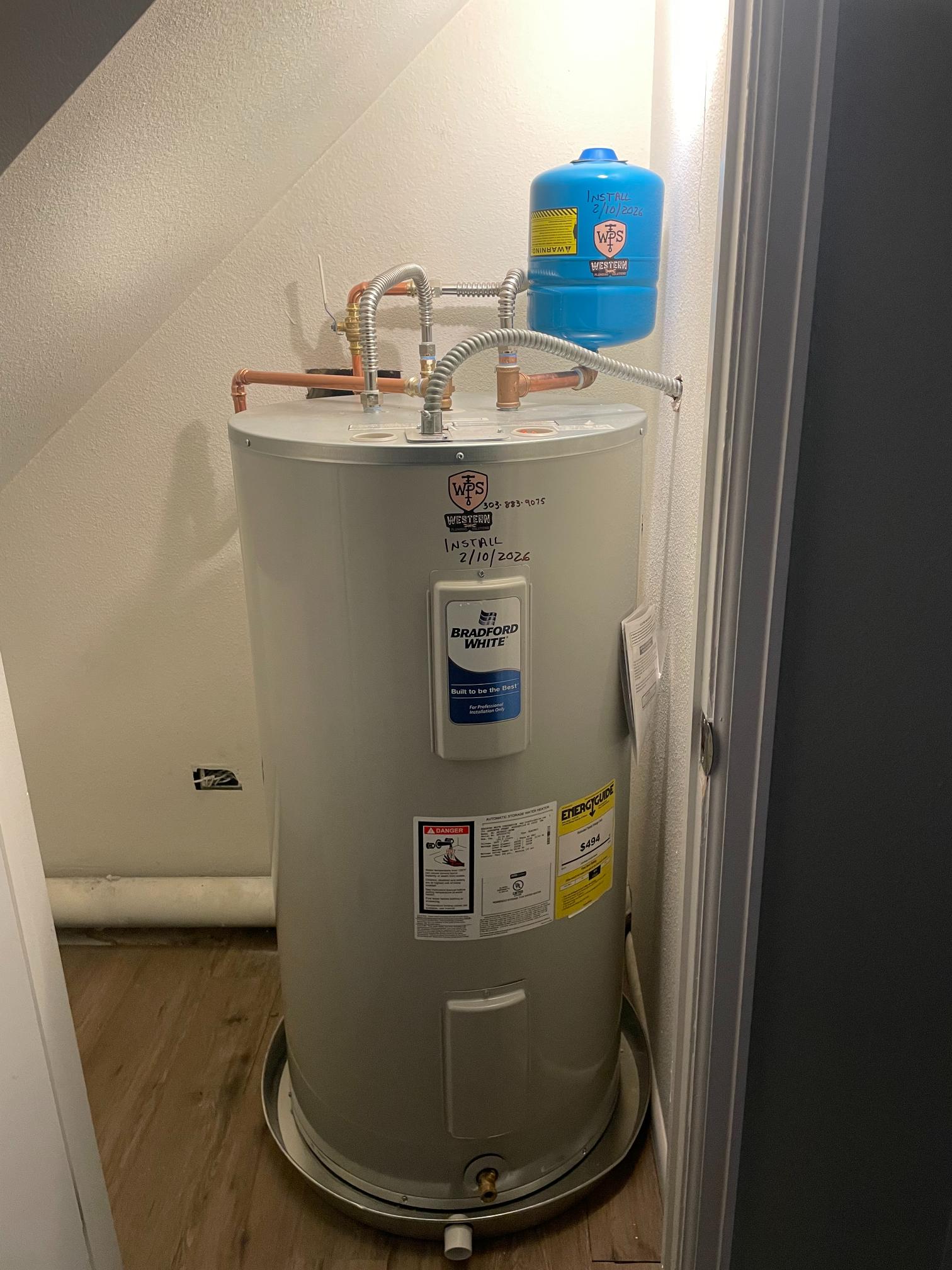
Demand is worth mentioning too. In newer foothills subdivisions the supply line to the house is sometimes sized right at the minimum, and it feels fine until two showers and a dishwasher run at once. That is not a failure, it is a capacity limit, and the honest answer is upsizing the supply rather than chasing parts. On well systems out in Douglas County the same complaint usually traces to the pressure tank or the pump switch rather than anything inside the house. See what a proper plumbing repair looks like in our gallery.
Permanent solutions
Low pressure fixed, not masked.
Booster pumps can mask low pressure but they are not a fix, they are a workaround. If the city pressure at your meter is adequate and the problem is inside the house, there is a real cause that has a real repair. Wes finds it. You will not be sold a pump as a substitute for diagnosing the actual problem.
The same goes for the other easy sale, which is telling somebody every galvanized house needs a full repipe. Plenty do. Plenty do not, and the ones that do not deserve to hear that. Wes has walked out of houses having cleaned four aerators and adjusted a stop, because that was the whole job. Doing it right the first time cuts both ways: it means not underdoing the repair, and it means not overdoing it either.
One more thing worth ruling out. Flow that keeps getting worse and a water bill creeping up together can mean a leak between the meter and the house, which is a main water line repair, not a fixture problem. If you suspect that, leak detection comes first.
Call (303) 883-9075 and describe what you are seeing. We come out, test, and tell you what it is.
How a call goes
Straight answer, fair price.
Same standard whether it is a quick job or a full replacement.
Describe the symptoms.
One fixture or all of them? Hot, cold, or both? Sudden or gradual? That shapes where we start.
Walk the fixtures.
Run each tap and compare. The pattern of what is weak points straight at the restriction.
Pull the cheap parts.
Screens, cartridges, stops. If the answer is a dime-sized screen, we would rather find that first.
Diagnose and quote.
You know the cause and the price before we order a part.
Repair and verify.
Fix the actual restriction, then run every fixture again to confirm the flow came back.
Straight answers
Questions about low water pressure solutions.
Only one faucet is weak. Is that the whole house?
No, and that is good news. When a single fixture is slow and the rest of the house runs normally, the restriction is at or near that fixture. Aerator screens, the cartridge inside the valve body, or the angle stops under the sink account for most of them. Those are small parts and short visits.
Why is only my hot water weak?
That points at the water heater side rather than the house piping. Sediment builds in the bottom of a tank on hard Front Range water and can restrict the outlet, and the shutoff valve on the heater sometimes gets left partly closed after service. Wes checks the heater and its valves before assuming anything about the supply lines.
Can I clean the aerators myself?
Absolutely, and it is the first thing worth trying. Unscrew the tip of the faucet, pull the screen, soak it in vinegar overnight, brush it out and put it back. If that restores the flow you just saved a service call. If four fixtures all come apart packed solid, that tells you something about the water and it is worth a conversation.
Does hard water cause low pressure?
Over time, yes. Front Range water carries a lot of dissolved mineral, and it deposits on the inside of pipe and inside every screen and cartridge it passes through. In galvanized steel it is worst because the scale grabs onto the corroding zinc coating. A softener or filtration does not undo existing buildup but it slows the next round considerably.
My pressure dropped suddenly instead of gradually. Does that matter?
It matters a lot. Gradual loss over years reads as buildup. A drop that happens in a day or two reads as a failed part or a leak. If the flow fell off and the water bill went up, there may be a break in the service line between the meter and the house that is losing water underground before it ever reaches a fixture.
Will a booster pump solve it?
Sometimes, but it is the last option, not the first. A pump forces more water through a restriction rather than removing the restriction, and on a corroded system it can accelerate failures. If the supply arriving at the house is genuinely inadequate, a pump is legitimate. If the house is choking itself, fix the house.
How long does the diagnosis take?
Usually under an hour for a typical home. Wes walks the fixtures, tests hot and cold separately, checks the stops and screens, and reads flow at the entry point. You get told what the cause is and what the repair runs before anything is opened up or ordered.
If it needs a repipe, do I have to hire someone else for the drywall?
No. Wes holds a master plumber license and a general contractor license, so the pipe work and the wall repair are the same job with the same person responsible. That is the main reason people call him for repipes. Nobody points at anybody else when it is time to close the wall back up.
Tired of waiting on the shower?
Call Wes. He finds what is actually restricting the flow and gives you a straight number to open it back up.