Sump Pump Repair
A sump pump that fails during a storm is the worst time to find out.
Most failures are a stuck float, clogged impeller, or failed check valve. Wes diagnoses and fixes them before the next rain.
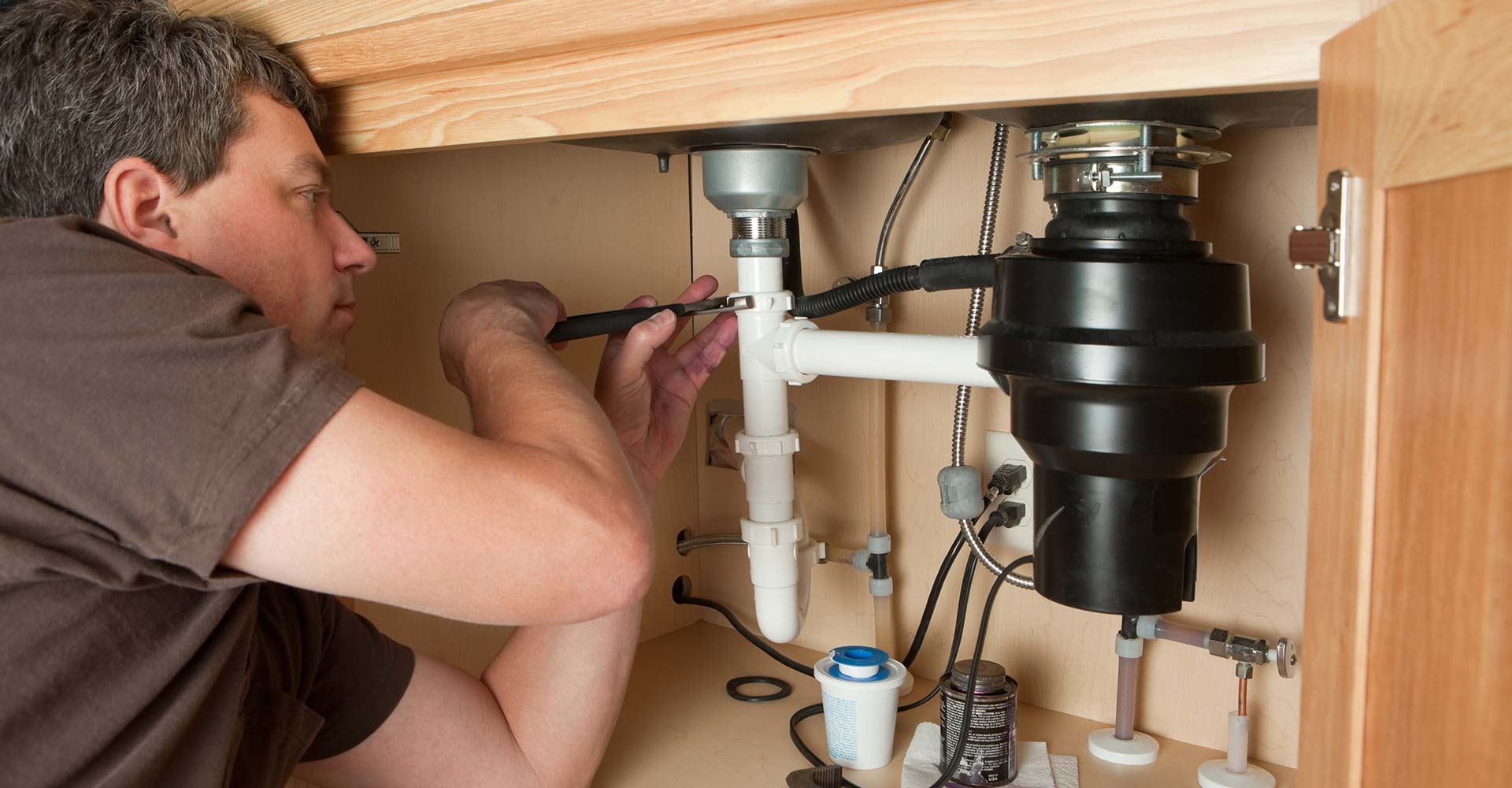
How sump pumps fail
Float, impeller, or discharge.
The float switch triggers the pump when water rises to a set level. A float stuck off lets the pit fill. A float stuck on runs the pump dry. The impeller can clog with debris. The check valve can fail, letting water back-drain into the pit immediately after every pump cycle, causing the motor to short-cycle and burn out early.
Wes tests the float, runs the pump, and inspects the discharge line before recommending parts. Get it checked before the next storm.
The float is far and away the most common culprit. A tethered float swings on a cord, and in a narrow basin it eventually swings over far enough to hang up against the pit wall or catch on the discharge pipe. When it hangs in the down position the pump never gets the signal and the pit fills past the rim. When it hangs up, the pump runs dry and the motor bakes. Swapping a tethered float for a vertical or solid-state switch fixes that class of failure permanently, and it is a small job compared to replacing a burned-out pump.
The noises tell you a lot before anything is disassembled. A grinding sound usually means gravel or a chunk of debris in the impeller. A hum with no water movement means the motor is energized but the impeller is seized or the shaft has failed. A loud bang every time the pump shuts off is the check valve slamming, which is annoying but also a sign the valve is worn or the wrong style for the run. Rattling in the pit is the discharge pipe unsecured and hammering against the liner. Wes listens first, then opens things up.
- Float switch testing and replacement
- Impeller cleaning and inspection
- Check valve replacement
- Discharge line inspection
- Motor testing
- Pit and inlet screen cleaning
Battery backup failure
The backup only works if the battery does.
Battery backup systems activate when the primary pump fails or power goes out during a storm. The batteries degrade in three to five years. A backup with a dead battery provides zero protection. Wes tests the battery, the secondary pump, and the alarm float, replacing whatever has failed.
Backup systems that have never been tested often have dead batteries and dead alarms. Testing before storm season is cheap insurance.
There is a second failure mode people miss entirely. A backup pump that has been quietly doing the primary pump’s job for months is not a backup, it is a warning. If the battery is drawing down between storms, or the backup has run cycles you never heard, the primary has already failed and nobody noticed because the basement stayed dry. Wes checks the run history on units that log it and looks at the wear on the backup impeller. Finding that during a service call is the difference between replacing one pump on a Tuesday and losing a finished basement during a June cell.
Charger and wiring problems account for a fair share of dead backups too. A charger left plugged into an outlet that also runs a freezer on a shared breaker gets knocked out every time that breaker trips, and nobody notices until months later. Terminals corrode. A battery stored on a cold concrete floor loses capacity faster than one on a shelf. These are small things that quietly turn a backup system into a decoration.
- Battery capacity test
- Backup pump operation test
- Alarm float testing
- Battery replacement
- Backup pump replacement
- Full system inspection
- Charger and terminal inspection
- Run history and cycle review
Discharge line problems
Where the water goes matters.
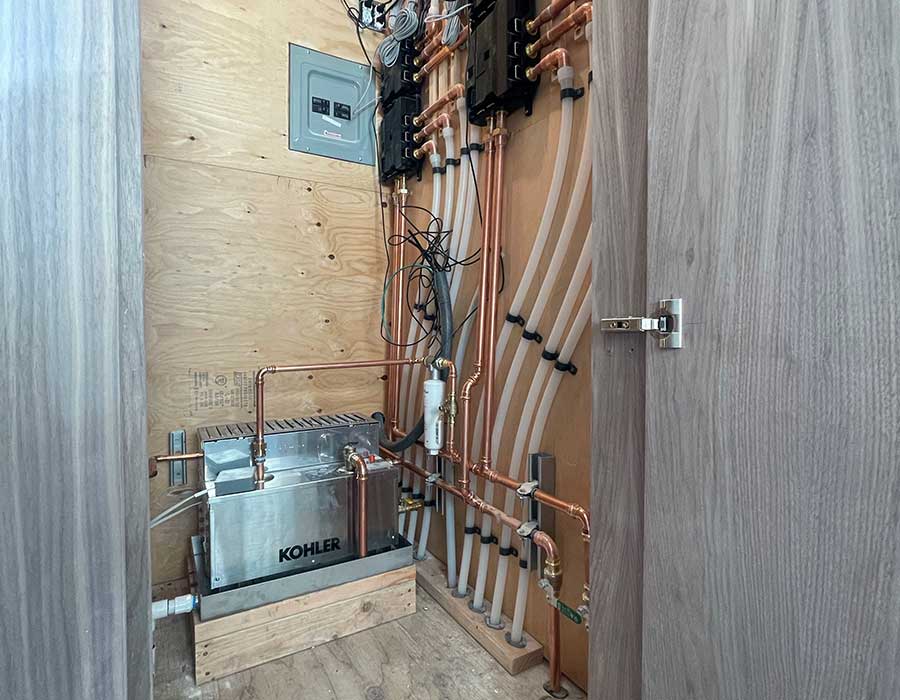
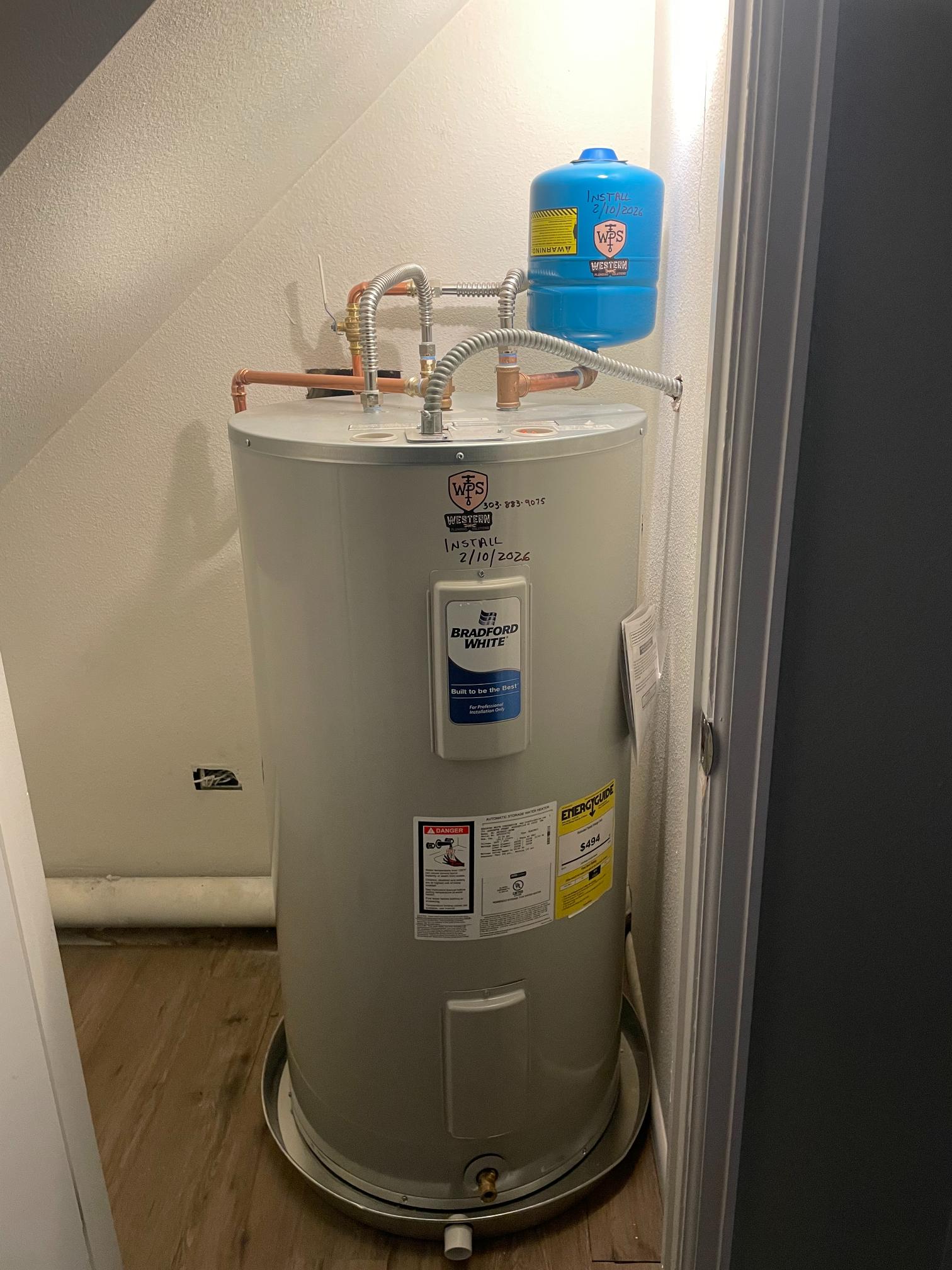
A frozen discharge line in a Colorado winter causes the pump to run continuously with nowhere to pump, overheating the motor. A failed check valve lets water back-drain into the pit immediately after shutoff, short-cycling the motor. Wes inspects the full discharge line and confirms the check valve is holding. See our work.
A frozen discharge is a genuinely Colorado failure and it is easy to misread. The pump sounds fine. It runs, it hums, it just never empties the pit. What happened is the exterior outlet iced over during a cold snap and the water in the horizontal run froze solid behind it, so the pump is pushing against a plug. Motors that run against a closed line overheat within minutes, and the thermal cutout that saves them from burning up also means the pump is off exactly when the melt starts. If your pump acts up in January but seemed fine in October, go look at the outside end of the pipe before you buy a pump.
The other quiet killer is short cycling. If the pump kicks on, empties the pit in four seconds, shuts off, and then starts again a minute later, either the check valve is letting the column of water in the discharge fall straight back into the basin, or the float is set too tight and it is chasing a small band of water. Both wear the motor out years early. Wes measures the drawdown, resets the float range, and replaces the check valve if it is not holding, which usually turns a pump that was cycling forty times an hour into one that runs a few clean cycles instead.
He also traces where the water is coming from in the first place. A pit that fills constantly in dry weather is not a pump problem, it is a groundwater or a leak problem. That can point to leak detection on a supply line, or to grading and footing drain issues. If the pump itself is at the end of its life rather than repairable, sump pump installation covers what a proper replacement involves. Tell us what it is doing and we will come diagnose it.
Before the next storm
Sump pump repair when it matters.
Front Range spring and summer storms can push significant water into basements. A pump working in February may not be working in May. Wes tests and services proactively. Finding a stuck float before a storm is a much better outcome than finding it during one.
Two checks a year is about right in Colorado: one in early spring before the melt and the wet months, one in late fall before the discharge line has to survive a winter. Pour a bucket into the pit, listen to the cycle, and look at the outside end of the pipe. Anything that sounds wrong, call. The phone is answered any hour, any day of the week, and a pump failing at two in the morning during a downpour is exactly the kind of call Wes takes.
Call (303) 883-9075.
How a call goes
Straight answer, fair price.
You call, we listen.
Tell us what is happening.
We look and diagnose.
No parts quoted before the cause is confirmed.
Straight quote.
You know the cost before we turn a wrench.
We do the work.
Tested before we leave.
Done right.
One master plumber, one point of contact.
Straight answers
Questions about sump pump repair.
How do I test my sump pump?
Pour a five gallon bucket of water into the pit until the float rises and the pump kicks on. It should draw the water down and shut off cleanly on its own. Grinding, humming with no water movement, or no activation at all means call us. Do the test twice a year, spring and fall.
How long do sump pumps last?
Seven to ten years with normal use. Pumps that short-cycle because of a failing check valve, or that run dry because a float hung up, burn out well before that. If yours is past ten and you are already calling about a symptom, repair money often goes further toward a replacement.
My pump runs but the water level does not drop. What is wrong?
Three usual causes: a clogged impeller, a check valve failing so water falls straight back into the pit, or a frozen or blocked discharge line outside. If it is January in Colorado, check the outdoor end of the pipe first. That one costs nothing to look at and it explains a lot of winter calls.
Why does my pump turn on and off every minute?
That is short cycling, and it is killing the motor. Either the check valve is letting the water in the discharge pipe drop back into the basin after every cycle, or the float is set to too narrow a band. Both are fixable in one visit and both are cheaper than the pump they will otherwise destroy.
Is repairing it worth it or should I replace the pump?
A float switch, a check valve, or a clogged impeller on a pump that is a few years old is worth repairing. A seized motor on a ten year old unit is not. Wes tells you which one you have and what each path costs before anything gets ordered, so the call is yours to make with real numbers.
My basement flooded even though the pump was running. Why?
Usually the water came in faster than the pump could move it, or the discharge was restricted so the pump was working against a partial blockage. It can also mean the pit is undersized for the drainage load. Wes measures how fast the pit refills to tell the difference between a pump problem and a volume problem.
Can I fix a sump pump myself?
Cleaning debris out of the pit and clearing the inlet screen is fine homeowner work. Pulling a pump, testing a motor, or replacing a check valve on a live discharge is where people get into trouble, usually by reinstalling on a discharge that was already the real problem. If it is wired to a dedicated circuit, leave the electrical alone.
Do you come out at night or on weekends for this?
Yes. The phone is answered around the clock, seven days a week. A failed pump during a heavy rain is not a Monday problem, and water in a finished basement gets more expensive every hour it sits. Call and Wes will tell you straight whether it can wait until morning or whether he is heading over.
Sump pump not working?
Call Wes before the next storm. Diagnosis and repair, not guesswork.