Gas Line Repair
A gas leak is not a DIY repair.
Wes locates gas leaks precisely, repairs the affected section, and pressure-tests the full system before putting it back in service.
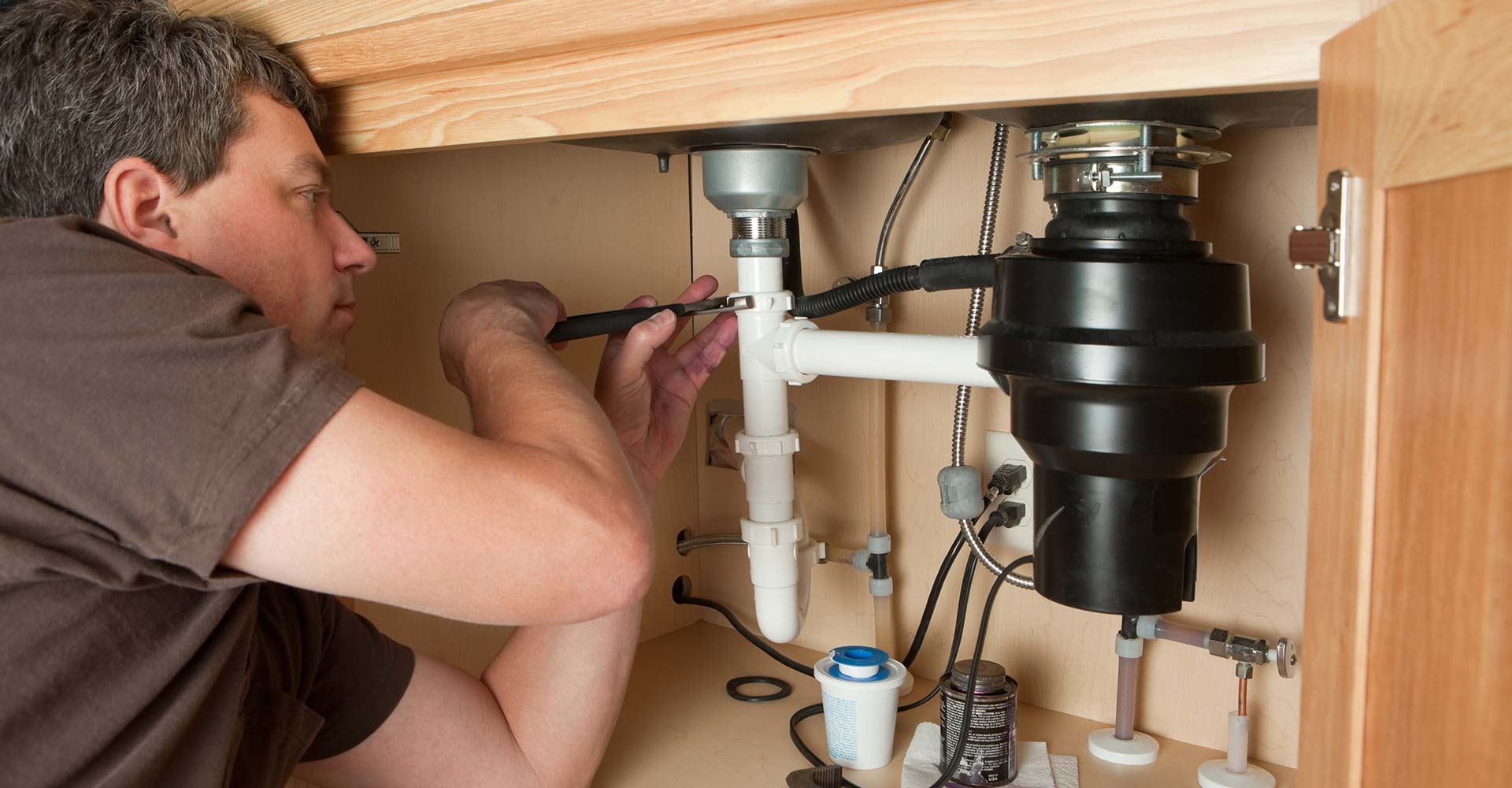
Signs of a gas line problem
Do not ignore these.
The smell of rotten eggs near an appliance, a pilot that will not stay lit, a hissing sound near a gas line or fitting, or a gas bill that suddenly spikes are all signs of a gas line problem. Any of these warrant an immediate call to the gas company to shut off supply, followed by a call to a licensed plumber.
The order matters, so read this part twice. If you smell gas, get everybody out of the house first. Do not flip a light switch, do not unplug anything, do not hit the garage door opener, and do not go hunting for the source with a lighter or a phone flashlight. Any spark in a room with a gas concentration is the thing you are trying to avoid. Once you are outside and well away from the building, call the gas utility emergency line or 911. They roll trucks around the clock and they will shut the meter and make the house safe. A plumber is the second call, not the first.
Some warning signs are quieter than a smell. Dead grass in a line over the buried service run, a hiss you only hear when the house is quiet, and a bill that jumped without a change in weather all point the same direction. That rotten egg odor is an additive, since natural gas has no smell of its own, and your nose goes numb to it after sitting in it a while. If a visitor mentions gas and you cannot smell anything, believe the visitor.
Wes locates gas leaks using calibrated detection equipment, finds the failing fitting or section, and makes the repair with the correct materials and fittings for the line type. Call immediately if you suspect a leak.
- Gas leak detection with detection equipment
- Corroded fitting replacement
- CSST repair and replacement
- Black iron pipe section repair
- Pressure test after repair
- Full system inspection
- Buried yard line leak location
- Appliance shutoff valve replacement
Corroded fittings and old pipe
Time and moisture compromise gas connections.
Gas line fittings in crawlspaces and older homes can corrode from moisture over time, especially at threaded black iron connections. CSST installed before current bonding requirements can develop arc damage from lightning or electrical faults. Wes inspects the gas line for these vulnerabilities when making a repair and notes anything that needs attention before it becomes a leak.
Where the corrosion shows up is predictable once you have crawled enough of these. Threads are the thin spot in black iron, and a threaded joint sitting in a damp mountain town crawlspace or against a bare foundation wall rusts from the outside in. Same story where a line passes through a slab or sits under a swamp cooler drip. The pipe in the middle of a run can look fine while the joint eight feet away is scaled and weeping. That is why a leak call gets the whole accessible system looked at instead of just the fitting that set off the detector.
CSST is the yellow or black flexible corrugated tubing that showed up in a lot of Front Range houses built from the late nineties on. It installs fast and it works, but its wall is thin compared to iron pipe, and it has to be bonded to the electrical grounding system so a nearby lightning strike or an electrical fault has a path that does not go through the tubing. Plenty of older installs were never bonded, or the bond was cut loose during later electrical work. Wes checks for the bond and for pinholes at the fitting collars, and any run showing arc damage gets replaced rather than patched.
Appliance connectors are the last common culprit. Those flexible whips behind a range or dryer flex at the same spot every time the appliance gets pulled out, and old uncoated brass connectors from decades back are a known failure that gets swapped on sight. A shutoff valve that will not turn gets replaced at the same visit, because a valve you cannot close is no help on the day you need it. Gas appliance work often runs alongside the rest of it, so the same trip can cover a water heater repair or a boiler that quit when the gas went off.
- Corroded threaded fitting replacement
- CSST arc damage assessment
- CSST bonding verification
- Black iron pipe section replacement
- Flexible connector replacement
- Appliance connection inspection
- Pressure test before commissioning
- Seized shutoff valve replacement
After any gas repair
Documentation and safe commissioning.
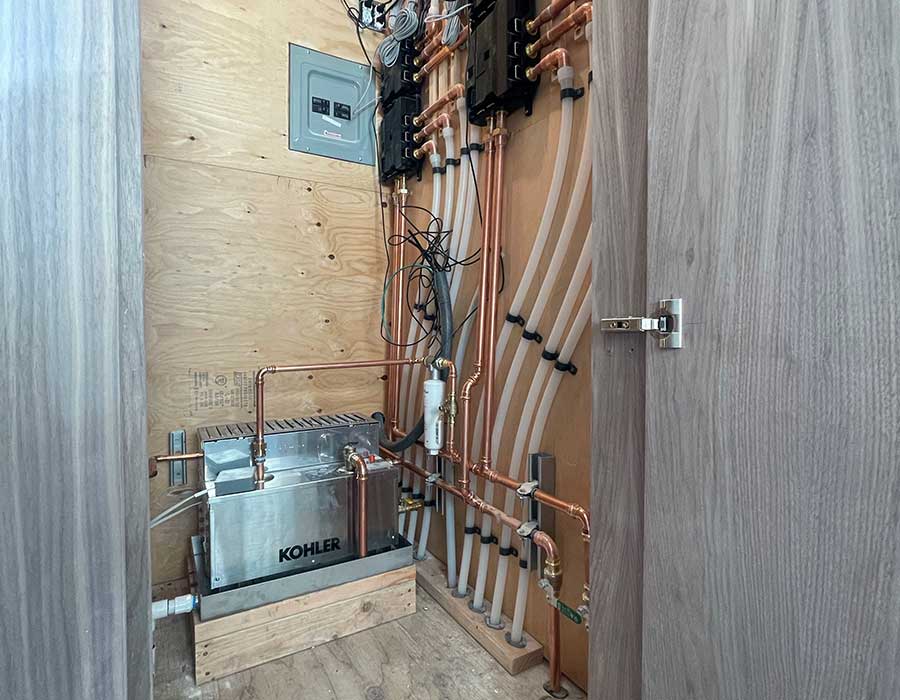
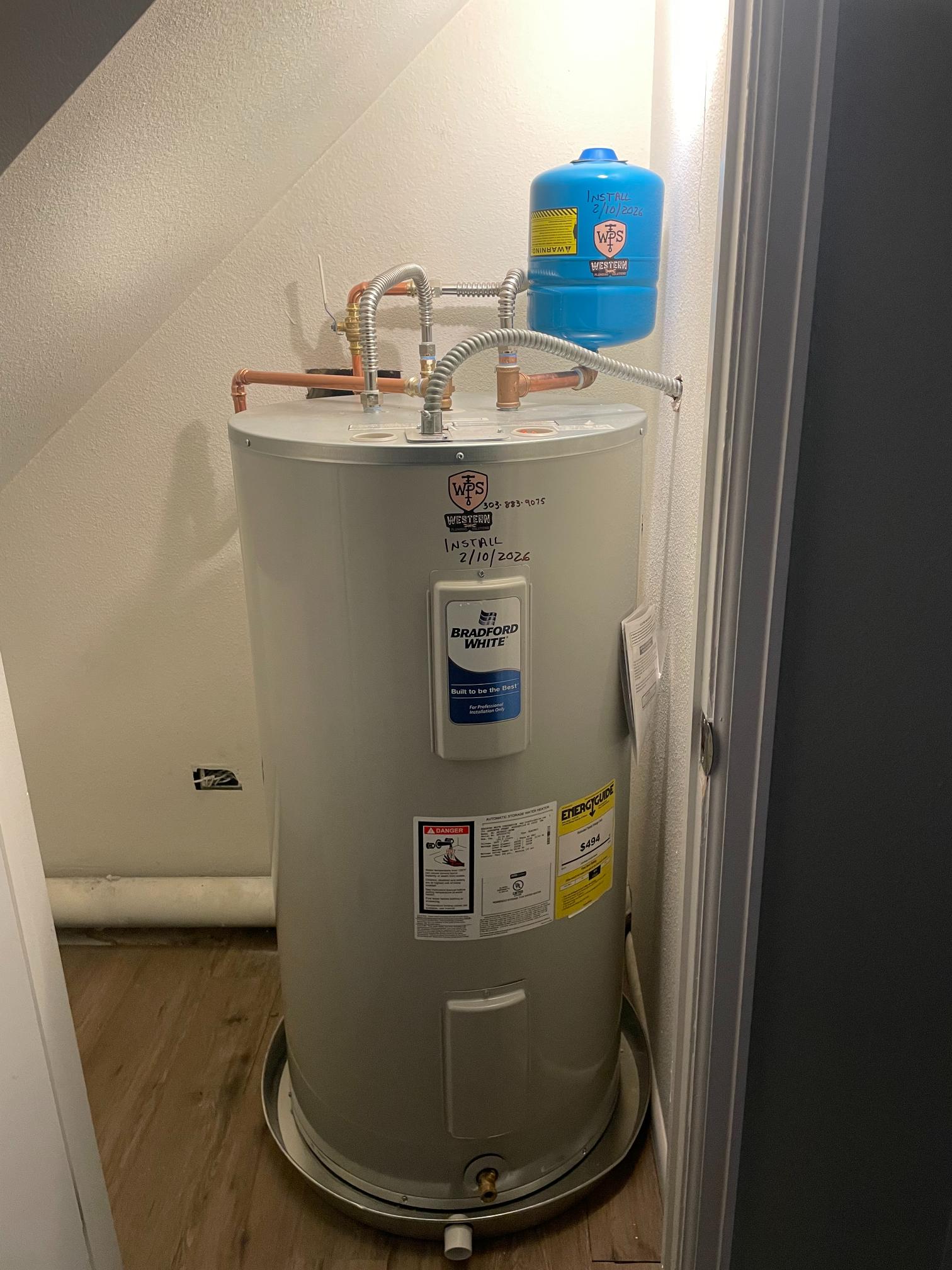
After a gas line repair, Wes pressure-tests the section and checks appliance operation to confirm the repair is holding. He relights pilots and confirms appliances are functioning correctly before leaving. See our work.
A pressure test is not a quick sniff around with soap. The repaired section is isolated, the appliances are valved off, the line is charged with air to the pressure the code requires, and a gauge sits on it for the required time with nobody touching anything. Either the needle holds or it does not. A line that drops even slightly still has a leak somewhere, and the honest move is to keep looking rather than call it good and hope. When a jurisdiction wants an inspector to witness the test, Wes schedules it and meets them.
Relighting is its own step. Standing pilots on older water heaters, wall furnaces and fireplace logs get brought back and watched through a full cycle. Electronic ignition units usually purge the air themselves after a few tries, though they can lock out first and need a reset. Wes stays until every appliance on that line has fired and run.
You get told what he found and what he replaced, in plain terms. If the leak was a symptom of something bigger, like a corroded run that is going to give somewhere else in a year, you hear that too. Sometimes the right answer is a repair today and a planned gas line replacement when the weather cooperates, and Wes will lay out both instead of pushing the bigger job.
Licensed gas work
Gas line repair done safely.
Gas line repairs in Colorado require a licensed master plumber with gas authorization. Wes holds that license and does the work correctly, with a pressure test before commissioning and documentation you can keep with the house records.
That license is also why the job does not fragment. Wes holds a master plumber license and a general contractor license, so if the repair means opening a wall, cutting a ceiling, or digging up part of a yard to reach a buried run, the patching and the restoration stay with him. You are not hiring a drywaller after the fact and waiting two weeks with a hole in the hallway.
Gas does not keep business hours, and neither does the phone here. If the utility has already been out and shut your meter, say so on the call, because getting the house back in service changes how the visit is planned. Otherwise send the details through the contact form and you will hear back.
Call (303) 883-9075 once the house is safe and the utility has been notified.
How a call goes
Straight answer, fair price.
You call, we listen.
Tell us what is happening.
We look and diagnose.
No work quoted before the cause is confirmed.
Straight quote.
You know the cost before we start.
We do the work.
Tested before we leave.
Done right.
One master plumber and licensed GC, one point of contact.
Straight answers
Questions about gas line repair.
What do I do if I smell gas?
Get everyone out of the house first. Do not operate switches, appliances, or the garage door opener, and do not look for the source. From outside and away from the building, call the gas utility emergency line or 911. They will shut off the supply and make the house safe. Call us after that, not before. Do not go back inside until the utility says it is clear.
Can you repair CSST gas lines?
Yes. CSST repairs and replacement sections are part of our gas line work. The critical part is bonding: CSST has to be bonded to the electrical grounding system so a lightning strike or an electrical fault does not arc through that thin corrugated wall. Plenty of older Front Range installs were never bonded properly. Any run showing arc damage gets replaced, not patched.
Do gas line repairs require a permit?
Repair work on existing lines often does not require a permit, but new sections and significant modifications do, and the threshold varies by jurisdiction across the metro. Wes assesses it and pulls the permit under his own license when it is needed. He would rather pull one you did not strictly need than leave unpermitted gas work in your house.
How do you find a gas leak?
With calibrated gas detection equipment that reads concentration and lets you walk it down to a specific fitting or section without taking the whole line apart. Soap solution confirms it at the joint once the meter narrows it down. For buried yard lines the approach is different, working the route and probing where readings climb.
How long does a gas line repair take?
An accessible fitting or a bad appliance connector is usually a same visit repair including the pressure test. A section of pipe inside a finished wall or ceiling takes longer because of the access and the patching. A buried yard line depends on the depth, the length of the run, and whether the ground is frozen, which on the Front Range it often is from December through February.
Can I just tighten the fitting myself?
No. Gas work in Colorado requires a licensed plumber with gas authorization, and there are good reasons beyond the paperwork. Overtightening a threaded joint splits the fitting. The wrong sealant on gas threads degrades and fails. And without a proper pressure test you have no idea whether you fixed it or moved it. This is one to leave alone.
Do you check the rest of the system while you are here?
Yes. A leak at one fitting usually means the conditions that caused it apply elsewhere on the same run, so the accessible parts of the system get looked at: threaded joints, appliance connectors, shutoff valves, and the CSST bond if there is CSST in the house. You get told what looks fine, what to watch, and what should be dealt with now.
Will a carbon monoxide detector warn me about a gas leak?
No, and this trips people up. A CO detector senses carbon monoxide, which is a product of incomplete combustion, not raw natural gas. It will not alarm on a leaking fitting. You want CO detectors in the house regardless, near sleeping areas and on every level, but for gas leaks you are relying on your nose and on getting the line tested.
Suspect a gas leak?
Call Wes. Licensed gas work, pressure-tested before commissioning.